

Outbuild is online scheduling software to work together on connected project schedules and look-aheads, enabling everyone to move faster.
Key Takeaways

- Schedules, Lookaheads, and Weekly Work Plans within one integrated platform.
- Real-time insights and project analytics through automated dashboards.
- Easier, streamlined plan management through a user-friendly interface.
Table of contents
- When the Schedule and the Field Stop Supporting Each Other
- What Each Planning Layer Is For
- Step 1: Make the Milestone Field-Ready
- Step 2: Build the Phase Pull Plan Backward From the Milestone
- Step 3: Move the Pull Plan Into Lookahead and Make-Ready Planning
- Step 4: Convert Make-Ready Work Into Weekly Commitments
- Step 5: Feed Field Performance Back Into the Schedule
- What This Looks Like in Practice
- Do This Monday: A Field-Ready Checklist
Every construction project has at least two planning layers. One sets milestone logic. The other turns those milestones into work the field can actually commit to.
On many projects, those layers drift apart. The master schedule stays in the office. The field rebuilds the short-term plan every week. The result is familiar. Milestones still exist, but the work needed to protect them is not being managed in a consistent, operational way.
That gap is not normal. It is a workflow problem. And it is fixable.
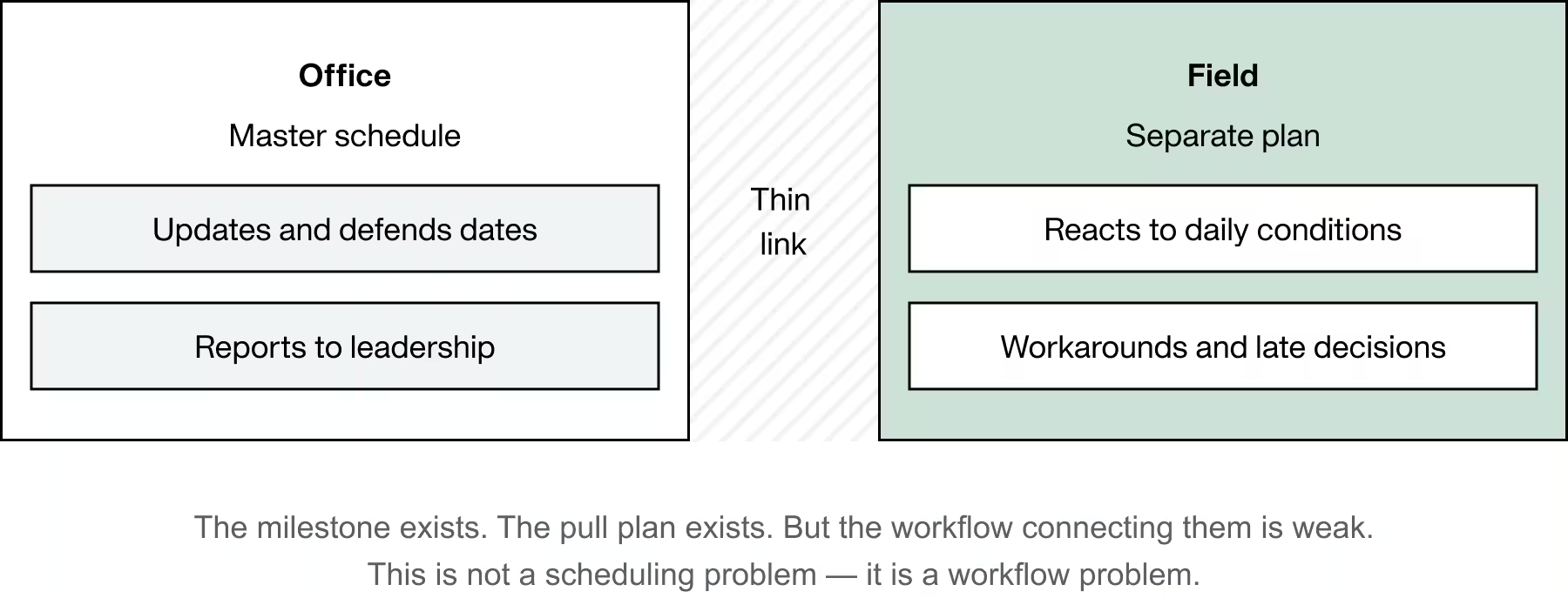
The disconnect between the master schedule and field execution is rarely caused by bad intent. Most teams do have a master schedule. Many also run pull planning sessions or maintain lookaheads. The real problem is that the link between those layers is often weak or inconsistent.
When that happens, the master schedule becomes something the office updates and defends, while the field runs on a separate version of the plan shaped by daily conditions, workarounds, and late decisions. The milestone exists. The pull plan exists. But the workflow connecting them is thin.
Many projects lose schedule reliability in exactly this space. The milestone is not translated into explicit handoffs. Constraints are not removed early enough. Weekly promises are made on work that is not ready. The result is schedule drift through a series of small disconnects instead of one major failure.
The fix is not just a better schedule. The fix is a better operating workflow, one that runs continuously from milestone to field and back again.
It helps to be precise about what each planning layer should do.
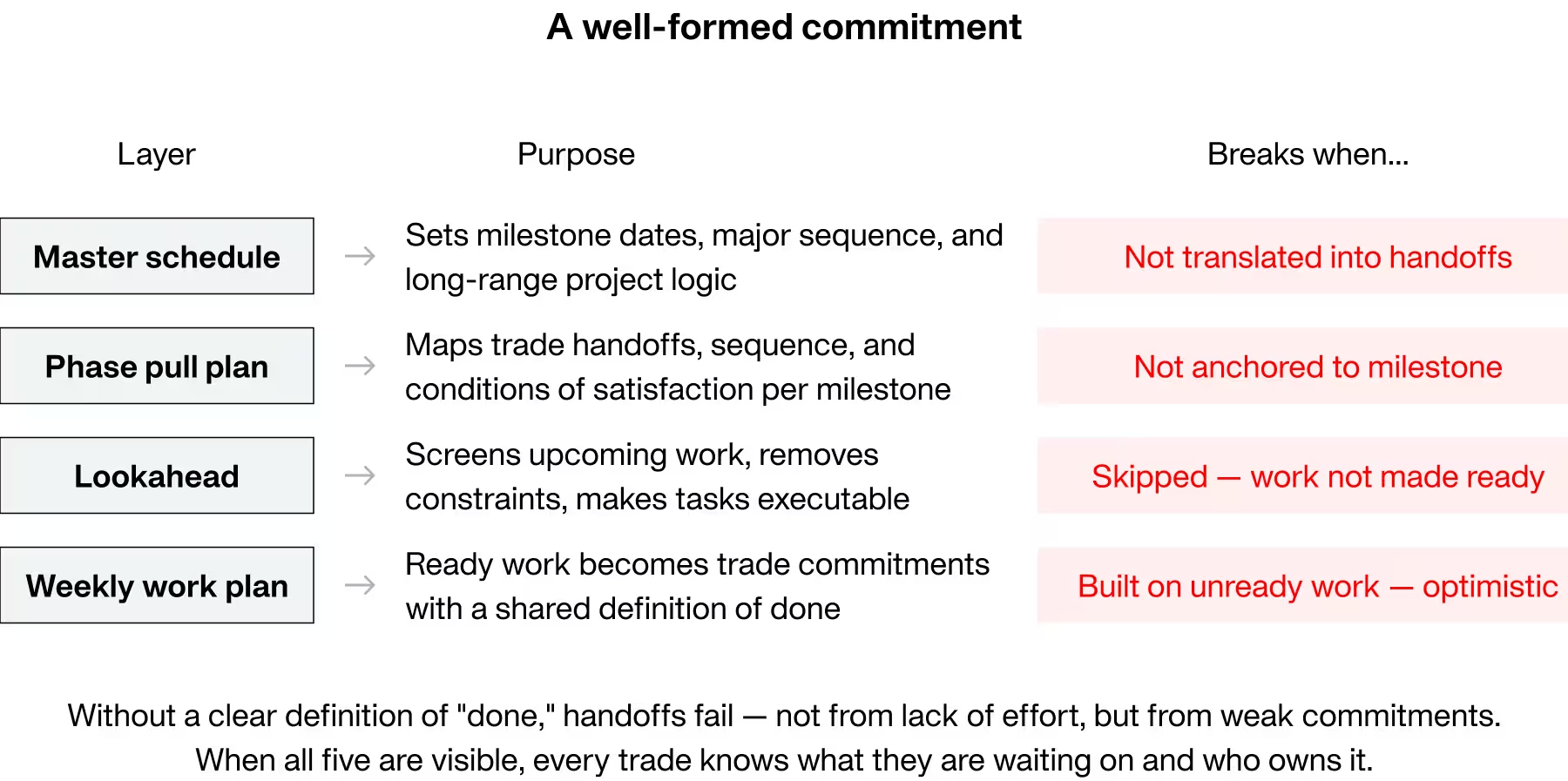
The master schedule is the project’s high-level control plan. It sets milestone dates, major sequence, and the long-range logic the team is trying to achieve.
The phase pull plan is the operational planning layer for a specific milestone, turnover, or work area. It maps trade handoffs, sequence, and the conditions that must be satisfied for the next step to start.
The lookahead plan is the make-ready layer. It screens upcoming work, identifies constraints, and drives the actions needed to make future tasks executable.
The weekly work plan is where ready work becomes commitments. This is the point where trade partners state what they will complete in the coming week, under known conditions and with a shared definition of done.
Projects lose control when these layers stop informing each other. When the phase plan is not anchored to the milestone, it drifts. When the weekly plan is not built from make-ready work, it becomes optimistic. And when field performance does not feed back into the forward plan, the schedule becomes a report instead of a control system.
The workflow in one sentence
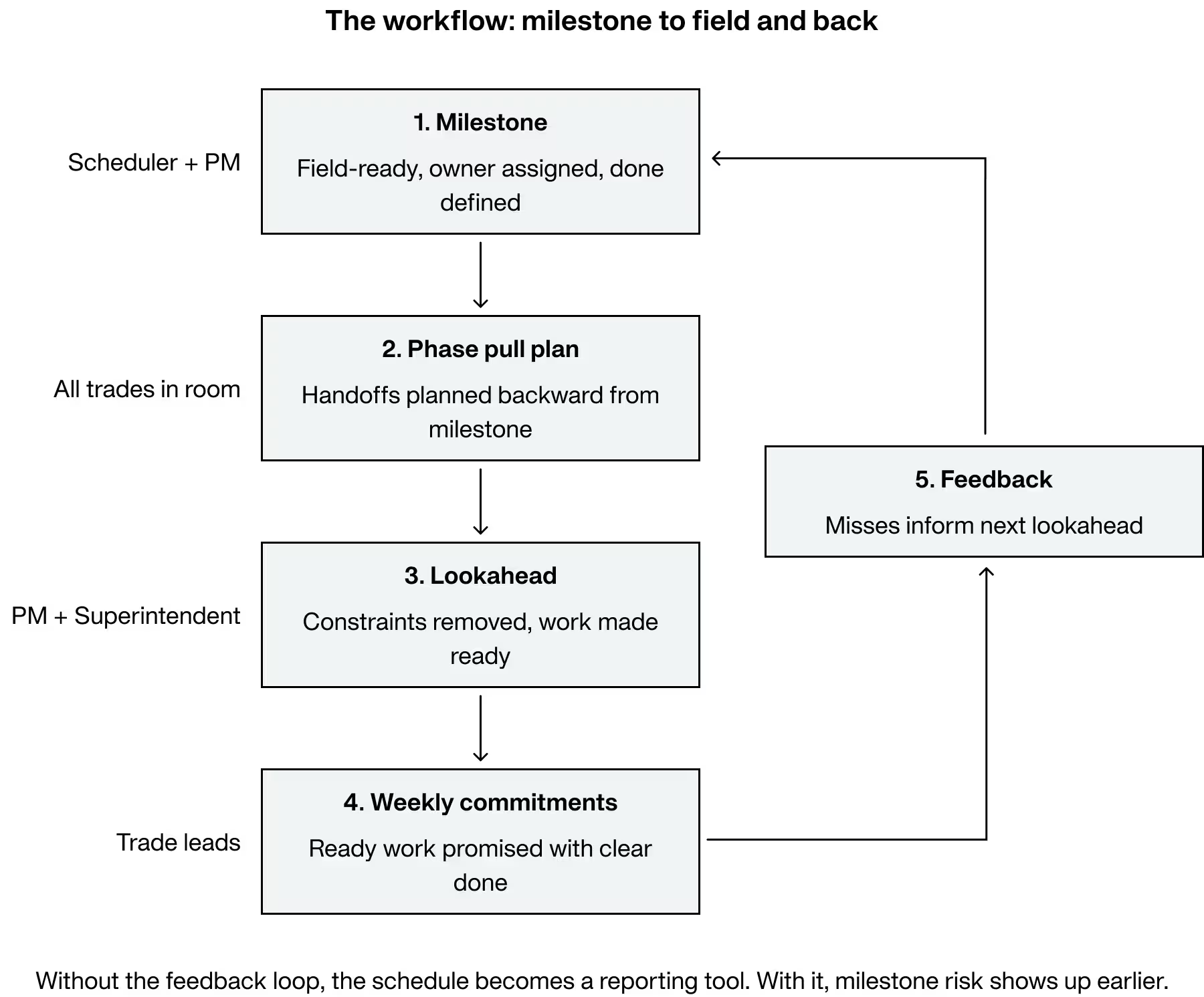
Start with the milestone, build the phase pull plan backward from it, turn each handoff into make-ready work with clear constraints and owners, then manage weekly commitments that roll up to the milestone.
This is not just a scheduling exercise. It is an alignment workflow. It connects long-range project control to real field execution.
Before pull planning begins, the milestone itself has to be usable in the field.
A milestone pulled straight from the master schedule is often written for reporting, contract administration, or executive review. It may not be specific enough for trade coordination. “Level 3 substantial completion” might be acceptable in a report, but it does not tell the team exactly what must be complete for the next handoff to occur.
That is why milestone preparation matters.
What a field-ready milestone looks like
A field-usable milestone should have three traits:
- A clear lead coordinator. One person is responsible for protecting the date and escalating threats, even if several parties must contribute.
- A clear definition of done. The team knows what is physically complete, what quality checks or inspections must be closed, and what the receiving party needs in order to start.
- The right level of granularity. If the milestone covers too much scope, too many trades, or too much time, it is too large to drive reliable pull planning.
If the receiving trade shows up and finds failed inspection, incomplete rough-in, missing backing, or unresolved access issues, the handoff was never clearly defined. A pull plan built from a vague milestone can still look organized and still fail in execution.
The quality of the downstream planning is limited by the quality of the milestone it starts from.
Once the milestone is field-ready, the next step is to plan backward from it.
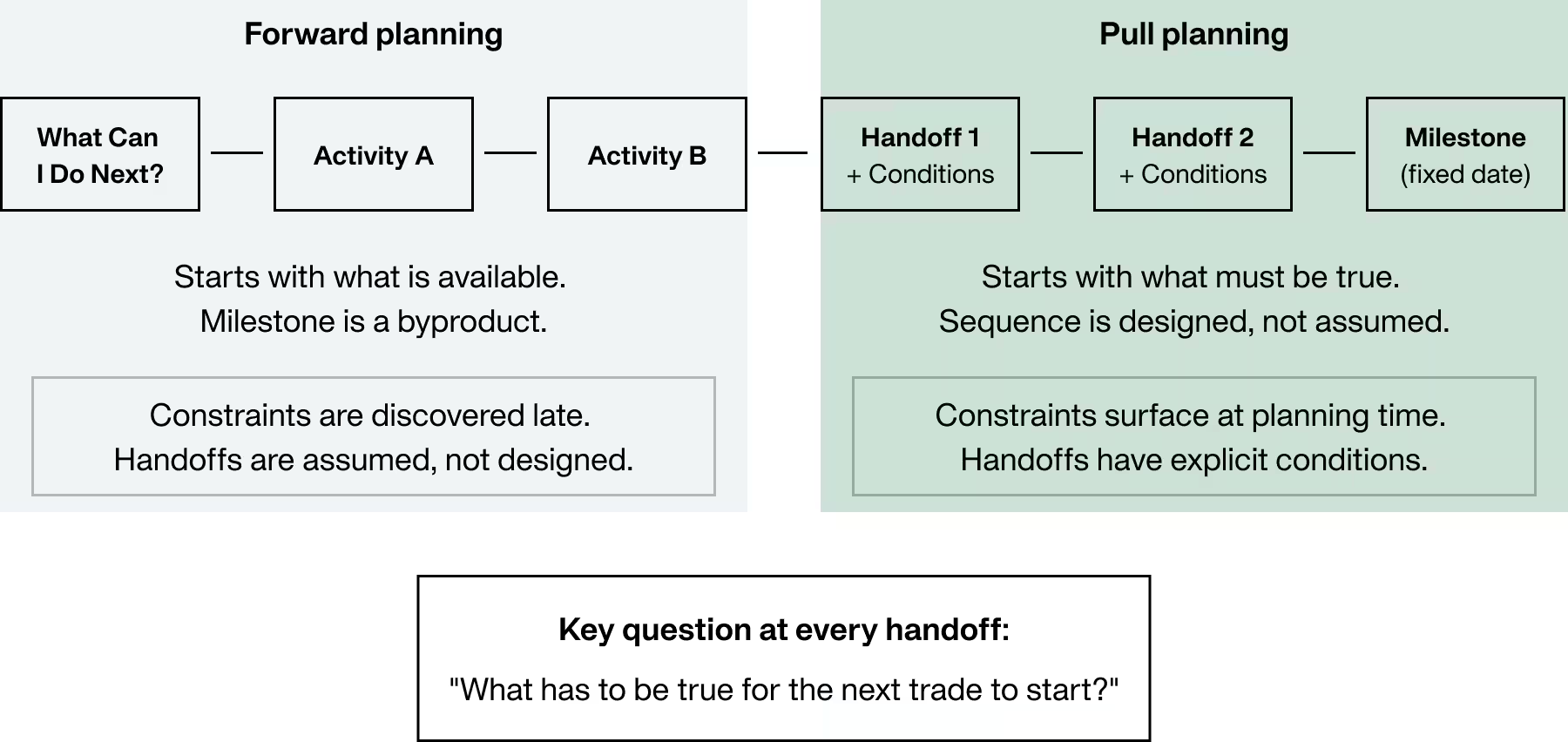
That direction matters. Forward planning often starts with what can be done next. Pull planning starts with what must be true for the milestone handoff to happen, then works backward through each predecessor handoff that makes it possible.
This changes the discussion. It forces the team to focus on sequence, dependencies, and conditions of satisfaction instead of just listing activities.
The output of a good pull planning session is not just a sequence of sticky notes. It is a chain of handoffs with explicit conditions that have to be made ready.
The handoff question that matters most
For every handoff in the phase pull plan, ask one question:
What has to be true for the next trade to start?
That is where the real value appears. The answer exposes constraints that are often left vague or assumed.
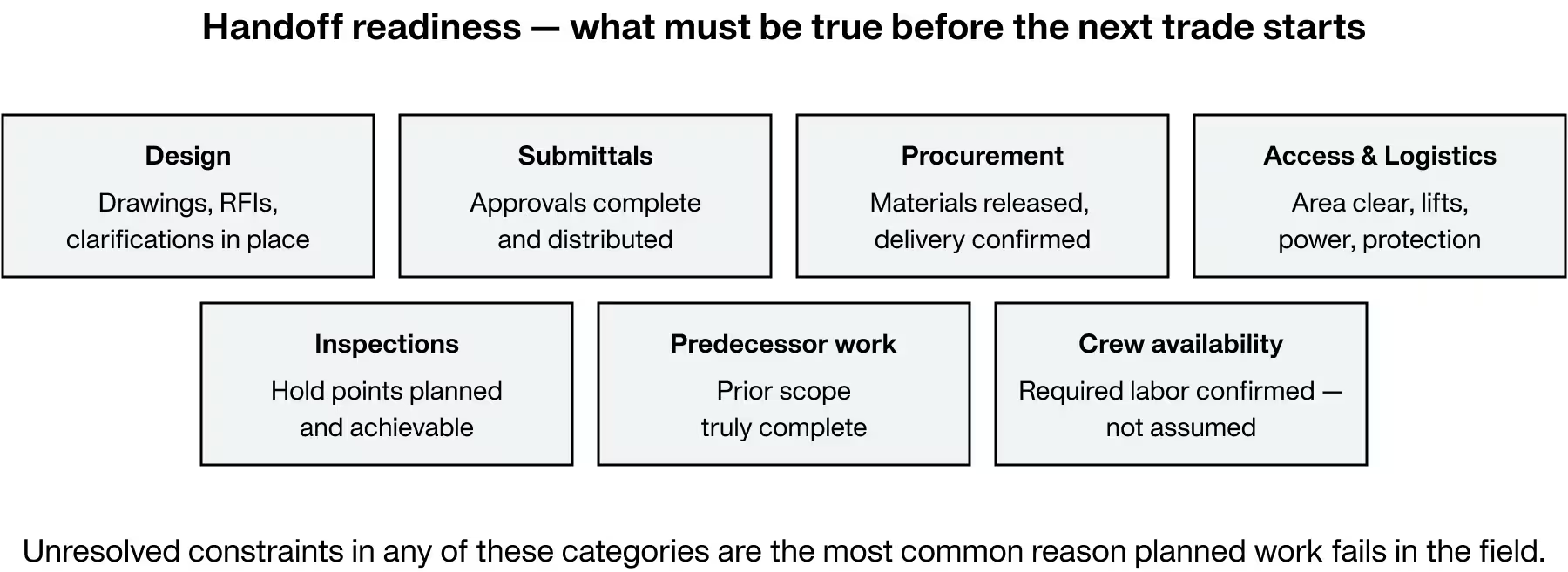
The categories that most often matter are:
- Design. Required drawings, RFIs, and design clarifications are in place.
- Submittals. Approvals are complete and distributed.
- Procurement. Materials are released, fabrication status is understood, and delivery windows align with site readiness.
- Access and logistics. The area is clear, lifts or scaffold are available, temporary power or protection is ready, and site logistics support the work.
- Inspections and quality hold points. Required inspections, sign-offs, and internal quality checks are planned and achievable.
- Predecessor work complete. The previous trade’s scope is truly complete and ready for turnover.
- Crew availability. The required labor is confirmed, not just assumed.
Unresolved constraints are one of the most common reasons planned work fails in the field. That is why make-ready planning and early constraint removal carry so much leverage.
The real product of a pull planning session is the chain of promises between trades and the conditions required to keep those promises.
This is the middle step many teams skip.
A strong phase pull plan does not go straight to weekly commitments. It first has to enter lookahead planning. This is where the team reviews upcoming handoffs, screens the work for readiness, and actively removes constraints before the work enters the weekly plan.
Without that step, teams jump from a good phase plan to bad weekly promises.
What the lookahead layer must do
A useful lookahead process should:
- identify the upcoming work tied to the phase sequence
- confirm whether each task is executable in the required time window
- assign owners to any open constraints
- set due dates for clearing those constraints
- escalate anything that threatens the handoff or milestone
This is where the phase pull plan becomes operational. It is no longer just a sequence. It becomes a managed backlog of work that is being made ready.
The lookahead is also where the field and office reconnect. Trade coordination, procurement follow-up, design decisions, logistics planning, and inspections all need to show up here, not later when the weekly plan is already breaking.
How to Fix the Disconnect Between the Office and Field.
Download the report to learn more:
- Learn about the why scheduling and planning fail the field
- Understand the pain points, inefficiencies, and evolving practices shaping scheduling today
- Find out how to bridge critical disconnects happening in construction
A pull plan on a wall is useful. A pull plan that drives weekly commitments is a control system.
Once work has passed through lookahead and is truly ready, it can enter the weekly work plan. That is where each trade makes specific commitments tied to the phase sequence.
Those commitments should not be vague activity updates. They should include:
- a named owner
- specific scope
- a defined area
- confirmed readiness
- a clear definition of done
At the end of the week, the team reviews a simple but important question: Did we keep our commitments? If not, why?
This is where the workflow starts improving over time. A team that logs missed commitments and reasons for variance will quickly see its recurring failure patterns. Design latency, inspection delays, procurement misses, access issues, or weak handoffs stop being isolated frustrations and become visible system problems.
That information is often more actionable for near-term control than a CPM update alone because it is grounded in what actually happened in execution.
The workflow is not complete unless field performance changes the forward plan.
This is what separates a schedule document from a schedule system. If the master schedule, phase plan, lookahead, and weekly plan are connected, then actual field performance can influence what happens next. Missed commitments, open constraints, and changing handoffs inform the next lookahead and, when needed, the next schedule update.
When that feedback loop is missing, the schedule becomes a reporting tool instead of a production control tool.
When the feedback loop is working, milestone risk shows up earlier. Recovery actions happen sooner. And the gap between what the schedule says and what the field knows gets much smaller.
A scheduler still matters. The scheduler maintains logic, supports forecasting, manages updates, and protects the integrity of the master schedule.
A superintendent still matters. The superintendent leads the field plan, coordinates handoffs, and protects near-term flow.
A PM still matters. The PM clears information barriers, supports procurement and decision-making, and helps remove constraints that the field cannot clear alone.
The workflow works when those roles connect through a shared planning rhythm:
- milestone alignment
- phase pull planning
- lookahead and make-ready review
- weekly commitments
- end-of-week learning and adjustment
That is how a milestone stops being just a date in software and becomes something the team can actually manage.
Pick one milestone in the next six to ten weeks and run the workflow once.
- Define the milestone precisely, with a lead coordinator, a clear definition of done, and a handoff date the team can describe the same way.
- Pull plan backward with the trades in the room, starting from the milestone and working back through the required handoffs.
- Capture the constraints at every handoff, including design, submittals, procurement, access, inspections, predecessor work, and manpower.
- Move the phase plan into a short lookahead review and assign owners and due dates to every open make-ready item.
- Only move work into the weekly plan after the team confirms it is ready.
- Review weekly commitment reliability and reasons for variance, then use that information to adjust the next lookahead and protect the milestone.
Schedules usually do not fail because the logic is completely wrong. They fail because the logic is not being translated into reliable handoffs, cleared constraints, and executable weekly commitments.
That workflow is the connection.
And once it is running, the distance between what the schedule says and what the field can actually deliver gets much smaller.
How to Fix the Disconnect Between the Office and Field.
A pull plan on a wall is useful. A pull plan that drives weekly commitments is a control system.
Once work has passed through lookahead and is truly ready, it can enter the weekly work plan. That is where each trade makes specific commitments tied to the phase sequence.
Those commitments should not be vague activity updates. They should include:
- a named owner
- specific scope
- a defined area
- confirmed readiness
- a clear definition of done
At the end of the week, the team reviews a simple but important question: Did we keep our commitments? If not, why?
This is where the workflow starts improving over time. A team that logs missed commitments and reasons for variance will quickly see its recurring failure patterns. Design latency, inspection delays, procurement misses, access issues, or weak handoffs stop being isolated frustrations and become visible system problems.
That information is often more actionable for near-term control than a CPM update alone because it is grounded in what actually happened in execution.
The workflow is not complete unless field performance changes the forward plan.
This is what separates a schedule document from a schedule system. If the master schedule, phase plan, lookahead, and weekly plan are connected, then actual field performance can influence what happens next. Missed commitments, open constraints, and changing handoffs inform the next lookahead and, when needed, the next schedule update.
When that feedback loop is missing, the schedule becomes a reporting tool instead of a production control tool.
When the feedback loop is working, milestone risk shows up earlier. Recovery actions happen sooner. And the gap between what the schedule says and what the field knows gets much smaller.
A scheduler still matters. The scheduler maintains logic, supports forecasting, manages updates, and protects the integrity of the master schedule.
A superintendent still matters. The superintendent leads the field plan, coordinates handoffs, and protects near-term flow.
A PM still matters. The PM clears information barriers, supports procurement and decision-making, and helps remove constraints that the field cannot clear alone.
The workflow works when those roles connect through a shared planning rhythm:
- milestone alignment
- phase pull planning
- lookahead and make-ready review
- weekly commitments
- end-of-week learning and adjustment
That is how a milestone stops being just a date in software and becomes something the team can actually manage.
Pick one milestone in the next six to ten weeks and run the workflow once.
- Define the milestone precisely, with a lead coordinator, a clear definition of done, and a handoff date the team can describe the same way.
- Pull plan backward with the trades in the room, starting from the milestone and working back through the required handoffs.
- Capture the constraints at every handoff, including design, submittals, procurement, access, inspections, predecessor work, and manpower.
- Move the phase plan into a short lookahead review and assign owners and due dates to every open make-ready item.
- Only move work into the weekly plan after the team confirms it is ready.
- Review weekly commitment reliability and reasons for variance, then use that information to adjust the next lookahead and protect the milestone.
Schedules usually do not fail because the logic is completely wrong. They fail because the logic is not being translated into reliable handoffs, cleared constraints, and executable weekly commitments.
That workflow is the connection.
And once it is running, the distance between what the schedule says and what the field can actually deliver gets much smaller.
Frequently Asked Questions
The master schedule is the project's high-level control plan. It sets milestone dates, major sequence, and long-range logic, usually built on Critical Path Method (CPM). A pull plan is the operational planning layer for a specific milestone or work area, built backward from that milestone with the trades who will execute the work. The master schedule tells you what needs to happen and when; the pull plan tells you how it will actually get done in the field, handoff by handoff.
hrough a continuous workflow with five steps: (1) make the milestone field-ready with a lead coordinator and a clear definition of done, (2) build the phase pull plan backward from the milestone with the trades, (3) move that plan into a lookahead and actively remove constraints, (4) convert make-ready work into weekly commitments with clear owners and scope, and (5) feed field performance back into the schedule so it stays current. Software like Outbuild keeps all four layers — master schedule, lookahead, weekly work plan, and field updates — in one connected system, so the link between them doesn't break.
Make-ready planning is the middle step many teams skip. It sits between the phase pull plan and the weekly work plan, inside the lookahead window (typically 3–6 weeks out). Its job is to screen upcoming work, identify open constraints — design, submittals, procurement, access, inspections, predecessor work, crew availability — and assign owners and due dates to clear those constraints before work enters the weekly plan. Without make-ready, weekly commitments are made on work that isn't truly ready, and reliability collapses.
Three common reasons: (1) the milestone itself was vague, so the pull plan was built on an unclear definition of done; (2) the phase pull plan never moved into a real lookahead, so constraints stayed unresolved; (3) the weekly commitments never feed back into the forward plan, so the master schedule stops reflecting what the field actually knows. The pull plan isn't usually wrong. The workflow around it is incomplete.
Most teams maintain these layers in disconnected tools — P6 or MS Project for the master schedule, whiteboards or Miro for pull planning, spreadsheets for lookaheads, and PDFs for weekly work plans. The handoffs between tools are where information gets lost. A connected platform like Outbuild keeps the master schedule, lookahead, weekly work plan, roadblock tracking, and field updates in one system, so milestone changes flow into the lookahead automatically, constraints are tracked against tasks, and variance data (PPC, reasons for variance) feeds back into the schedule. That feedback loop is what turns the schedule from a reporting document into a production control system.


Ready to see Outbuild?
Join hundreds of contractors from 10+ countries that are saving money by scheduling better





We’ll be in touch soon!