

Outbuild is online scheduling software to work together on connected project schedules and look-aheads, enabling everyone to move faster.
Key Takeaways

- Schedules, Lookaheads, and Weekly Work Plans within one integrated platform.
- Real-time insights and project analytics through automated dashboards.
- Easier, streamlined plan management through a user-friendly interface.
Table of contents
- Why Teams Get Surprised by Schedule Risk
- Where This Fits in the Planning System
- Step 1: Start With the Milestone and the Work Driving It
- Step 2: Translate Float Into Buffer Language the Field Can Use
- Step 3: Treat Constraints as Leading Indicators
- Step 4: Use Weekly Commitment Reliability as a Risk Signal
- Step 5: Move Risk Review Closer to the Work
- What This Looks Like on a Real Job
- Do This Monday: A Field-Ready Checklist
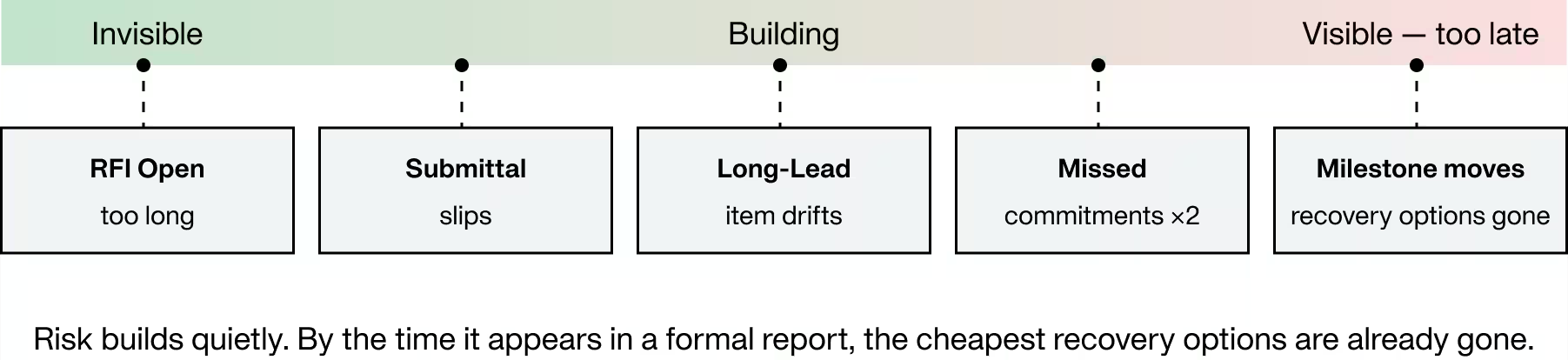
Schedule risk rarely shows up all at once. It builds quietly in the background. An RFI stays open too long. A submittal slips. A long-lead item drifts. A trade misses weekly commitments for two weeks in a row. By the time the issue becomes obvious in a formal update, the team has usually lost its easiest recovery options.
The teams that manage schedule risk well are not always the ones with the most advanced scheduling tools. They are the ones that make risk visible early, in a form the field and office can use together.
That does not require turning everyone into a scheduler. It requires turning schedule risk into a practical operating conversation.
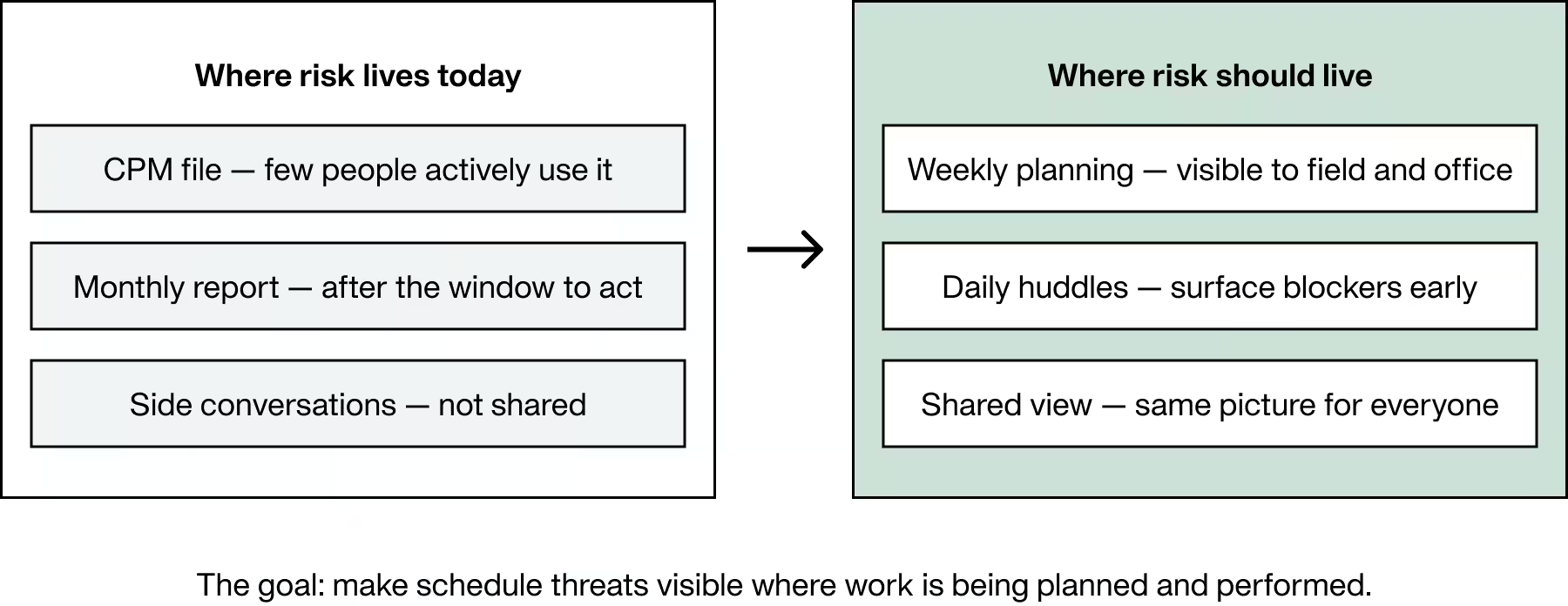
On many projects, schedule risk lives in the wrong places. It sits in a CPM file that only a few people actively use. It appears in a monthly report after the team has already missed the chance to respond cheaply. It gets discussed in side conversations instead of shared production meetings.
The result is predictable. The field is dealing with today’s disruptions. The office is reporting next month’s dates. Leadership hears that things are under control until a milestone starts to move.
The problem is not that field teams do not care about schedule. The problem is that risk is often buried inside tools, reports, and terminology that do not help day-to-day execution.
A scheduler who understands logic, float, and update discipline is valuable. But a project that can only see schedule risk through one person is exposed. The goal is not to replace the scheduler. The goal is to make schedule threats visible where work is being planned and performed.
The One-Sentence Answer
The most effective approach is simple: turn schedule risk into operational signals the team can act on this week, what milestone is at risk, what work is driving it, what constraints are still open, and what decisions need to happen now.
That is the difference between analyzing risk and controlling it. Analysis describes exposure. Control changes the outcome.
This approach does not replace the CPM schedule. It makes the schedule more usable.
The CPM schedule still sets milestone logic, major sequence, and overall duration targets. The field risk view translates that logic into near-term signals the team can use through lookaheads, constraint removal, weekly planning, and daily coordination.
In practice, this works between the master schedule and the weekly work plan:
- The master schedule defines the milestone and logic.
- The phase plan clarifies sequence in a specific area or turnover.
- The lookahead identifies and removes constraints.
- The weekly work plan turns ready work into commitments.
- The daily huddle protects the plan and escalates breakdowns early.
If those layers are disconnected, schedule risk stays hidden longer than it should.
Most field teams do not need to start with full schedule detail. They need to understand the next milestone, the work sequence currently driving that milestone, and the biggest threats to keeping that date.
That is the first shift. Start the conversation with milestone risk, not raw schedule output.
A field-friendly milestone view should show three things:
- the milestone date
- the work sequence currently driving, or most likely to drive, that milestone
- the top risks threatening that sequence, written in plain language
For example, a team does not need to review every activity in the schedule to manage an area turnover. They need to know whether overhead rough-in, inspection, ceiling close-in, and equipment set are still lining up, and what is currently threatening that chain.
A useful test is simple. If a superintendent cannot explain the risk to the next milestone in 30 seconds, the view is still too complicated.
Float matters in formal schedule control. But for many field leaders, float does not drive action unless it is translated into simpler production language.
That is where buffer comes in.
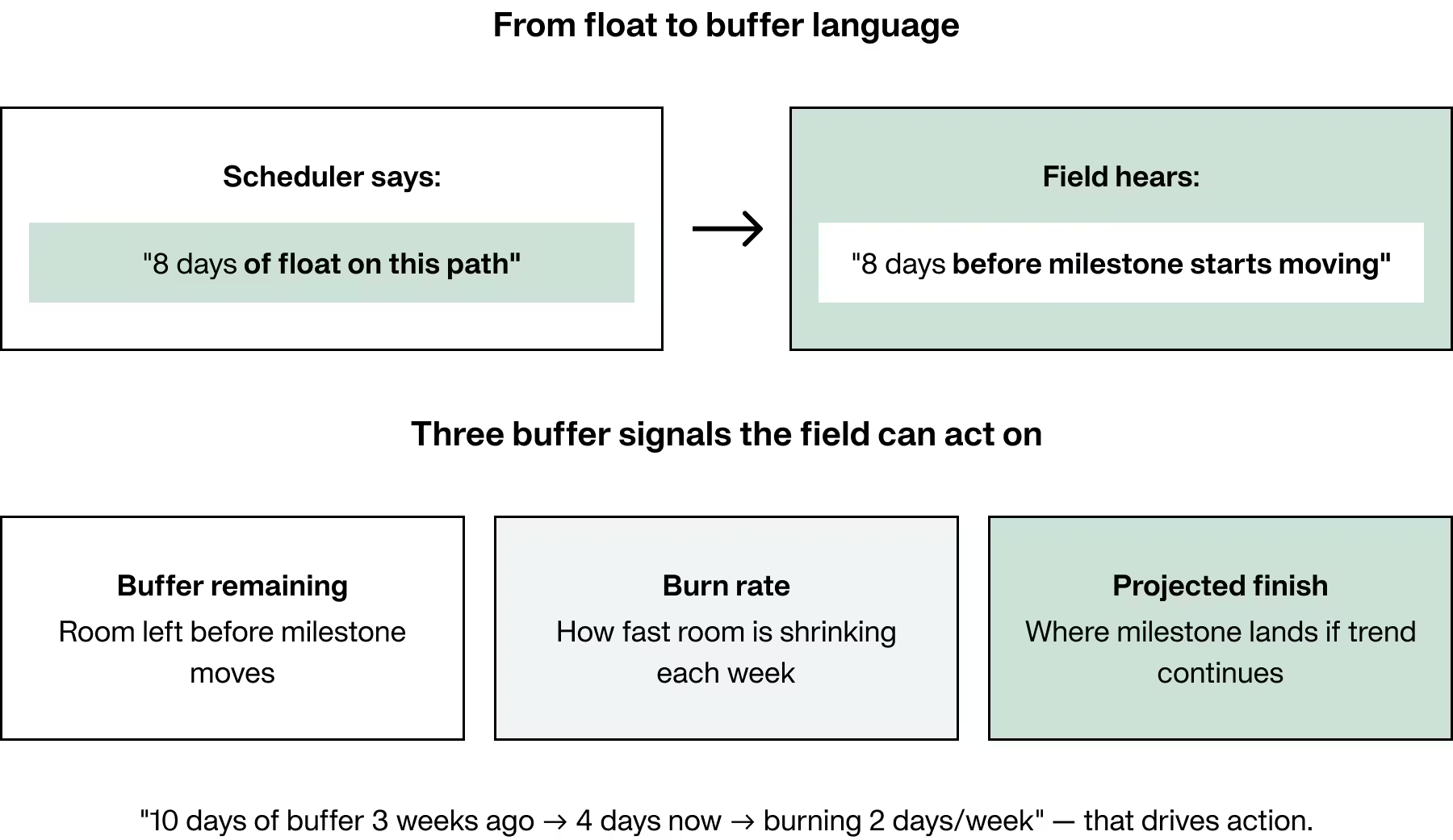
Instead of telling a foreman there are eight days of float on a path, tell the team there are eight days of buffer left before the milestone starts moving. Then show how quickly that buffer is being consumed.
Three simple concepts make this practical:
- Buffer remaining: how much room is left between current performance and the milestone date
- Burn rate: how quickly that room is shrinking based on recent production or missed handoffs
- Projected finish: where the milestone will land if the current trend continues
This does not replace the scheduling math. It makes the schedule easier to use in weekly and daily conversations.
A field team may not react to “negative float risk” in the abstract. It will react to “we had ten days of buffer three weeks ago, now we have four, and we are burning two days a week.” That framing turns schedule risk into something the team can see and act on.
Milestones show where the team is trying to go. Buffer shows how much room is left. Constraints show what is likely to break first.
That is why constraints are one of the strongest leading indicators a project team can track.
The most common schedule-threatening constraints are not complicated:
- RFIs that are still open or aging
- submittals waiting on approval
- long-lead materials not yet released or confirmed
- predecessor work not complete
- inspections not planned or not aligned with the sequence
- manpower that is planned but not actually available
- access, logistics, or temporary works issues
- owner or design-team decisions that are still unresolved
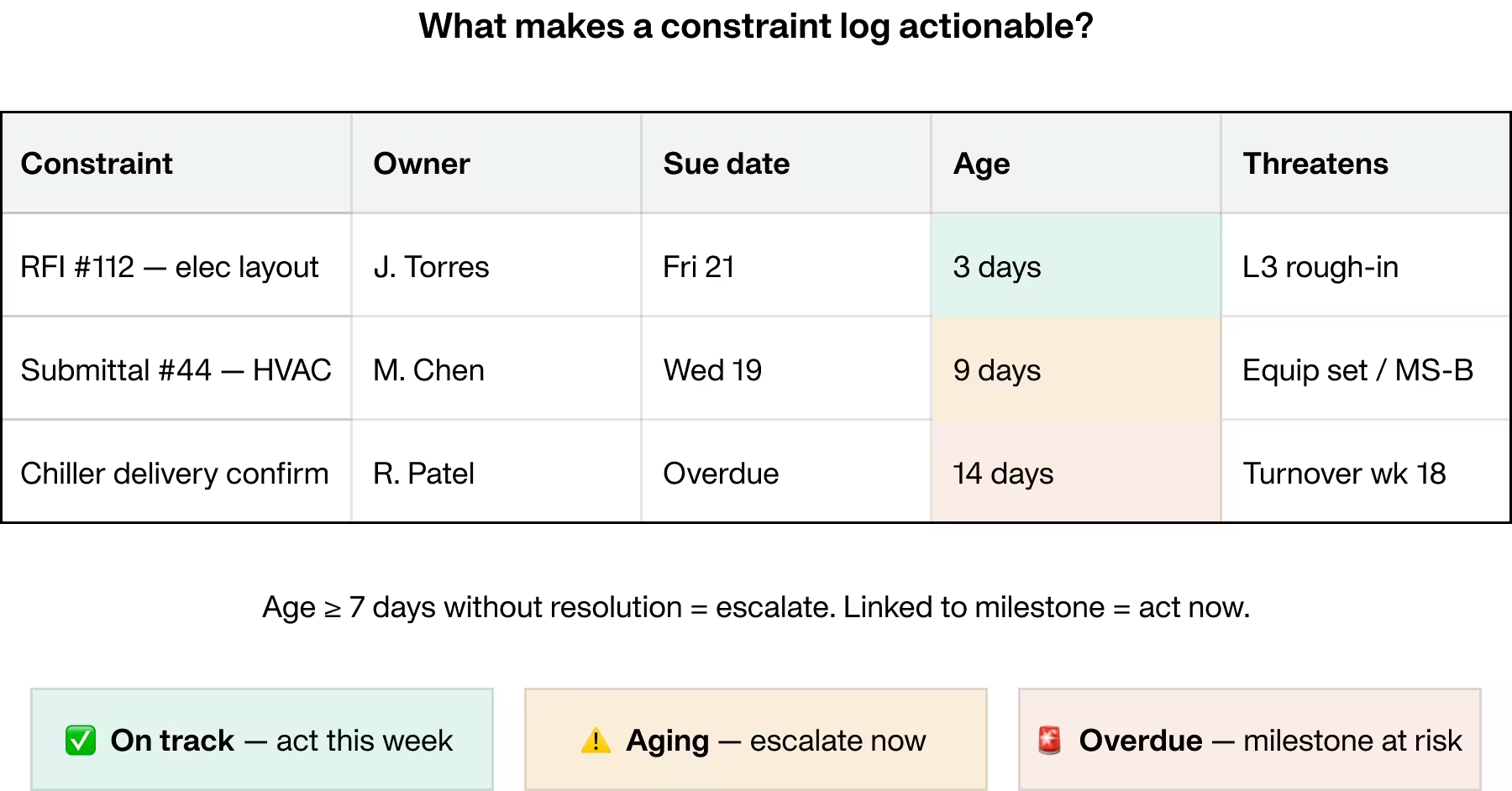
A good constraint log is more than a list. For near-term production control, it functions like a live schedule risk register.
To work well, each constraint needs:
- one named owner
- a due date tied to when it must be cleared to protect the work
- aging, so the team can see how long it has remained unresolved
- linkage to the commitment, area, or milestone it threatens
That last part matters. A constraint becomes much more actionable when the team can see exactly what it puts at risk.
When constraints are visible, owned, and reviewed routinely, teams stop hiding problems and start managing them earlier.
One of the most useful early indicators of schedule trouble is simple: how reliably is the team keeping its weekly commitments?
A project can still look stable in a formal schedule while near-term execution is deteriorating. If weekly commitments are being missed repeatedly, the team is building schedule exposure before a milestone officially slips.
That is where Percent Plan Complete, or PPC, becomes useful.
PPC does not measure total schedule health by itself. It measures how reliably the team is completing the work it said it would complete in the near term.
Used correctly, that makes PPC a practical warning sign.
If PPC stays low week after week, the issue is usually not just planning quality. It often means work is entering the weekly plan before it is truly ready, handoffs are weak, or recurring constraints are not being removed fast enough.
PPC becomes more useful when paired with reasons for variance. Every missed commitment should have a reason the team can act on, such as:
- design information not available
- predecessor incomplete
- material not delivered
- labor shortfall
- access problem
- equipment issue
- inspection delay
- weather
Over time, these patterns matter more than the weekly percentage alone.
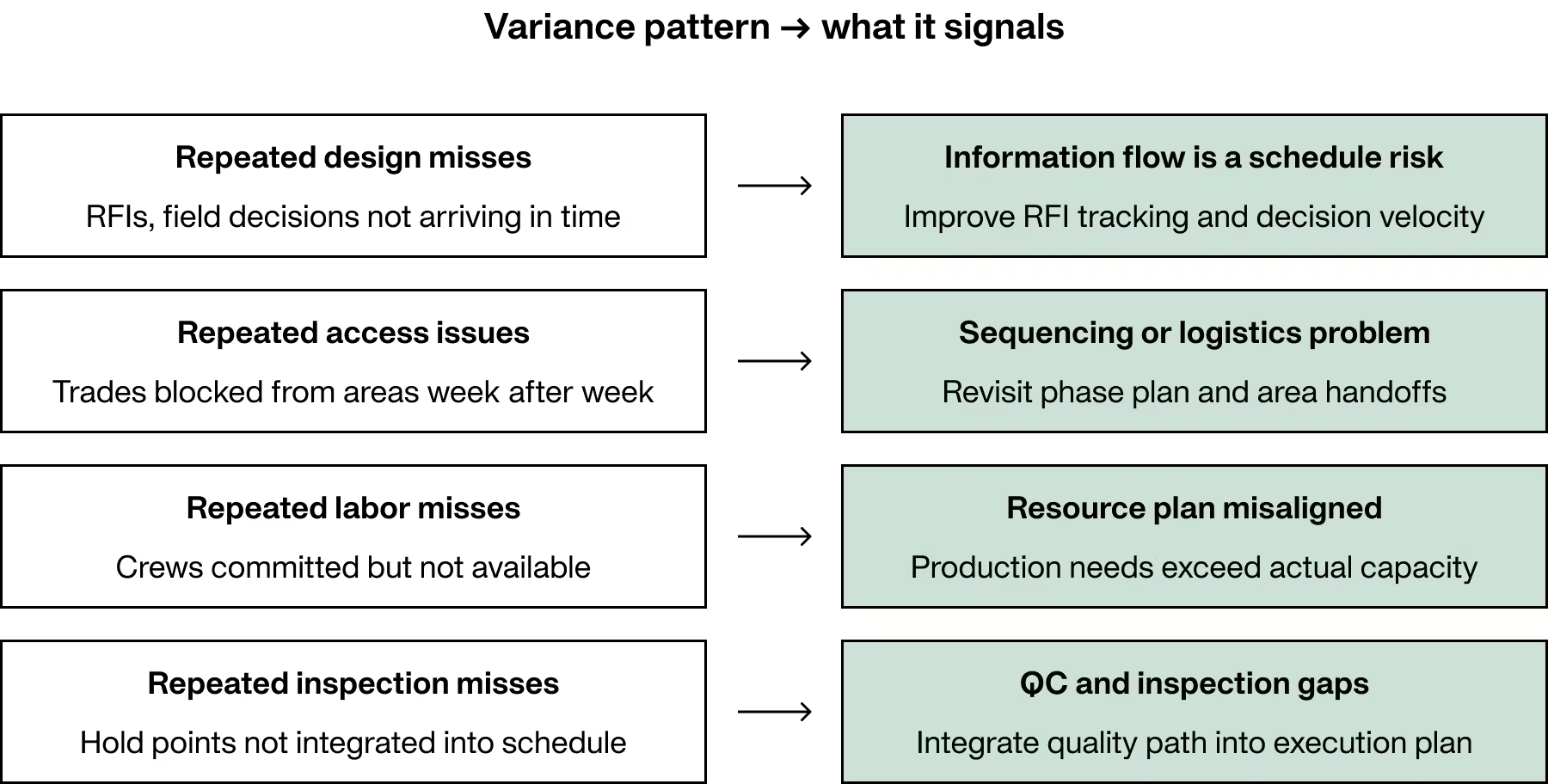
For example:
- repeated design-related misses mean information flow is a schedule risk
- repeated access issues point to sequencing or logistics problems
- repeated labor misses show the resource plan does not match production needs
- repeated inspection misses show quality and inspection planning are not integrated into execution
When the team reviews these patterns consistently, missed commitments stop being isolated incidents. They become useful schedule intelligence.
The most important change is timing.
When schedule risk is discussed only in monthly reporting, the team is usually explaining what already happened. When milestone health, buffer consumption, constraint status, and commitment reliability are reviewed weekly and daily, the team has a chance to change what happens next.
That is how schedule risk becomes operational instead of administrative.
In practice, that means:
- reviewing milestone-driving work in weekly planning meetings
- checking open constraints and overdue decisions before work is promised
- using daily huddles to surface new blockers quickly
- reviewing commitment misses and reasons for variance at the end of the week
- escalating recurring threats before they show up as milestone movement
This is not formal schedule risk modeling. On large or highly complex projects, that still has an important place. But most projects also need a practical system that helps the field and office see schedule threats early enough to respond.
A superintendent does not need to open a full CPM file every morning to control risk. The superintendent needs to know whether the next turnover is still protected, what work is driving it, what open constraints threaten it, and which decisions cannot wait another day.
A PM needs the same picture, plus confidence that procurement, information flow, and trade coordination are aligned with that near-term plan.
A scheduler still plays an important role. The scheduler maintains logic, updates the formal schedule, tests sequence impacts, and supports forecasting. But the team manages risk better when those schedule insights are translated into simple signals everyone can use.
That is how fewer surprises happen. Not because uncertainty goes away, but because the team sees it sooner.
Going from Scheduler to Strategic Leader
An inside look at how construction scheduling is evolving
- Dive into the problem schedulers face with the status quo
- Learn about elevating the Scheduler Role
- Discover the rise—and limitations—of modern scheduling tools
- Understand how to evaluate scheduling software (with a handy checklist!)
Start with the next milestone. Identify the work sequence currently driving that date and write the top three risks in plain language.
Restate schedule health in buffer terms the field can use. Show how much room is left and whether that room is shrinking.
Build or clean up the live constraint log. Give every blocker an owner, a due date, aging, and a link to the work it threatens.
Track weekly commitment reliability. Review both PPC and reasons for variance.
Review risk patterns weekly, then roll up trends monthly.
Make sure the field and office are looking at the same picture of milestone risk, constraints, and near-term commitments.
Construction will always have uncertainty. That is normal. The bigger problem is risk that stays invisible long enough to become expensive.
That problem is solvable. And most teams can start solving it this week, even without a specialized scheduler in every conversation.
Going from Scheduler to Strategic Leader
Start with the next milestone. Identify the work sequence currently driving that date and write the top three risks in plain language.
Restate schedule health in buffer terms the field can use. Show how much room is left and whether that room is shrinking.
Build or clean up the live constraint log. Give every blocker an owner, a due date, aging, and a link to the work it threatens.
Track weekly commitment reliability. Review both PPC and reasons for variance.
Review risk patterns weekly, then roll up trends monthly.
Make sure the field and office are looking at the same picture of milestone risk, constraints, and near-term commitments.
Construction will always have uncertainty. That is normal. The bigger problem is risk that stays invisible long enough to become expensive.
That problem is solvable. And most teams can start solving it this week, even without a specialized scheduler in every conversation.
Frequently Asked Questions
Risk sits in places the field does not use daily, such as CPM files and monthly reports. Issues surface after low-cost recovery options are gone.
Turn risk into weekly operational signals. Identify the at-risk milestone, the work driving it, open constraints, and decisions needed now.
Milestone date. The driving sequence. The top risks threatening that sequence, written in plain language.
Reframe float as buffer before the milestone moves. Track buffer remaining and how fast it is being consumed, then review the projected finish if the trend continues.
Each constraint needs one owner, a due date tied to when it must be cleared, aging, and a link to the commitment, area, or milestone it threatens.


Ready to see Outbuild?
Join hundreds of contractors from 10+ countries that are saving money by scheduling better





We’ll be in touch soon!