


Outbuild is online scheduling software to work together on connected project schedules and look-aheads, enabling everyone to move faster.
Key Takeaways

- Schedules, Lookaheads, and Weekly Work Plans within one integrated platform.
- Real-time insights and project analytics through automated dashboards.
- Easier, streamlined plan management through a user-friendly interface.
Table of contents
- Transparency Is Not a Dashboard, It Is Trust
- The Mental Model: Jobs Run on Handoffs and Commitments
- Step 1: Stop Managing Near-Term Work as Activity Lists. Start Managing It as Commitments.
- Step 2: Make Work Readiness Visible Before the Commitment Is Made
- Step 3: Use One Shared Cadence for Making and Reviewing Promises
- Step 4: Measure Reliability, Not Blame
- What This Looks Like in Practice
- Do This Monday: A Field-Ready Checklist
Most teams think schedule transparency means sharing the schedule. It does not. On a multi-trade project, real alignment happens when teams make reliable near-term commitments against a shared sequence.
On most jobs, the schedule is available. Updates get sent. Dashboards get published. But trades still arrive in areas that are not ready. Inspections get missed. One missed handoff upstream breaks the sequence downstream.
The issue is not lack of visibility. The issue is that most shared information does not show what each trade is actually ready to promise. A CPM schedule can show what should happen. A team still needs a system that makes near-term work ready, turns it into commitments, and reviews whether those commitments held.
Real transparency is not just visibility. It is reliability. Reliability comes from commitments, not calendars.
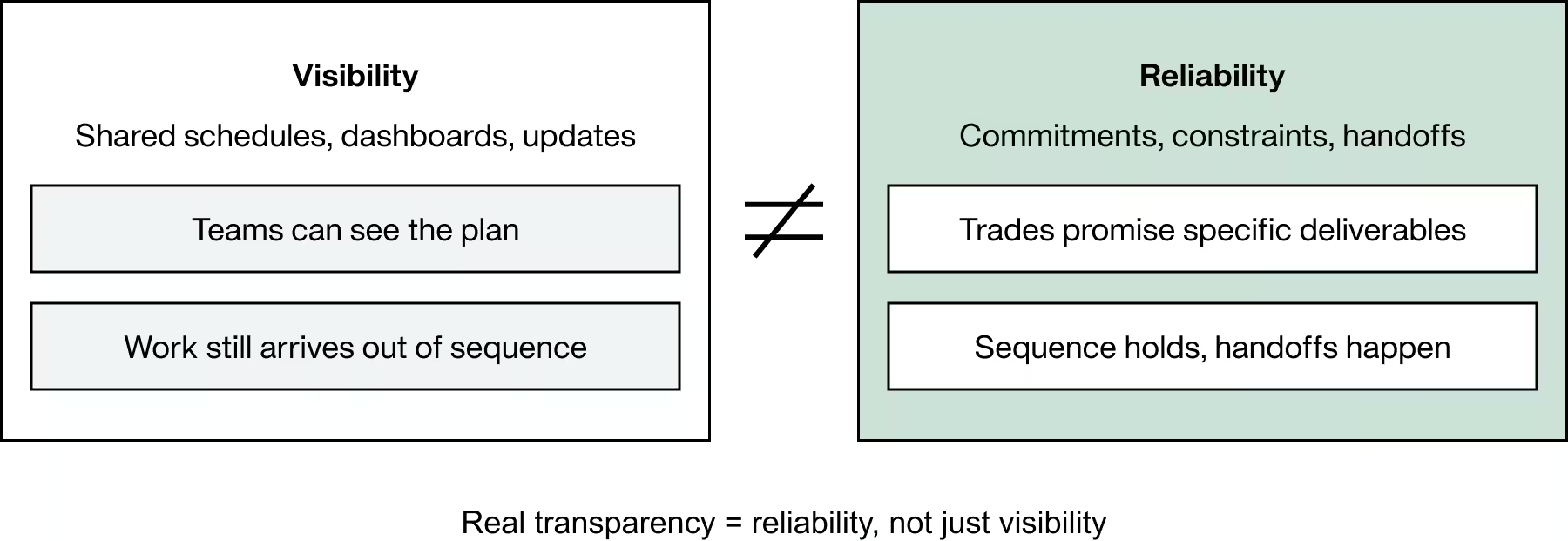
Here is the problem on many construction projects. The team shares information, but that information does not reflect real field readiness.
Activity lists, Gantt bars, and exported lookaheads often show planned work. They do not always show whether the work is constraint-free, understood by the trade, and ready to execute in sequence.
Transparency becomes useful when it shows what is actually true on the job:
- what is ready
- what is not ready
- which constraints are still open
- which trade owns the next handoff
- what was promised for this week
- what actually got finished
That level of visibility can be uncomfortable. It exposes weak handoffs, hidden blockers, and promises that were not ready to be made. But that discomfort is productive. The alternative is a team operating on assumptions until something breaks in the field.
A CPM schedule sets project targets, milestones, and major logic. Day-to-day production runs on handoffs and commitments between trades.
One trade says embeds will be in by Thursday. Another expects access Friday morning. Inspection needs to clear before drywall starts. Those near-term promises are what actually move the work.
This is the core idea behind the Last Planner System, developed by Glenn Ballard and Greg Howell and documented through Lean construction practice and research. LPS improves planning reliability by having the people closest to the work help shape phase plans, remove constraints in lookahead planning, and make weekly commitments only from work that is ready.
That distinction matters. When something slips, the useful question is not only why the schedule moved. The better question is which handoff failed, what constraint was missed, and what needs to change so the next promise is more reliable.
The one-sentence answer
If you want schedule transparency across trades, build one shared commitment system where every trade makes weekly promises tied to the phase plan, constraints are visible and owned, and reliability is reviewed for learning, not punishment.
How this fits with the schedule
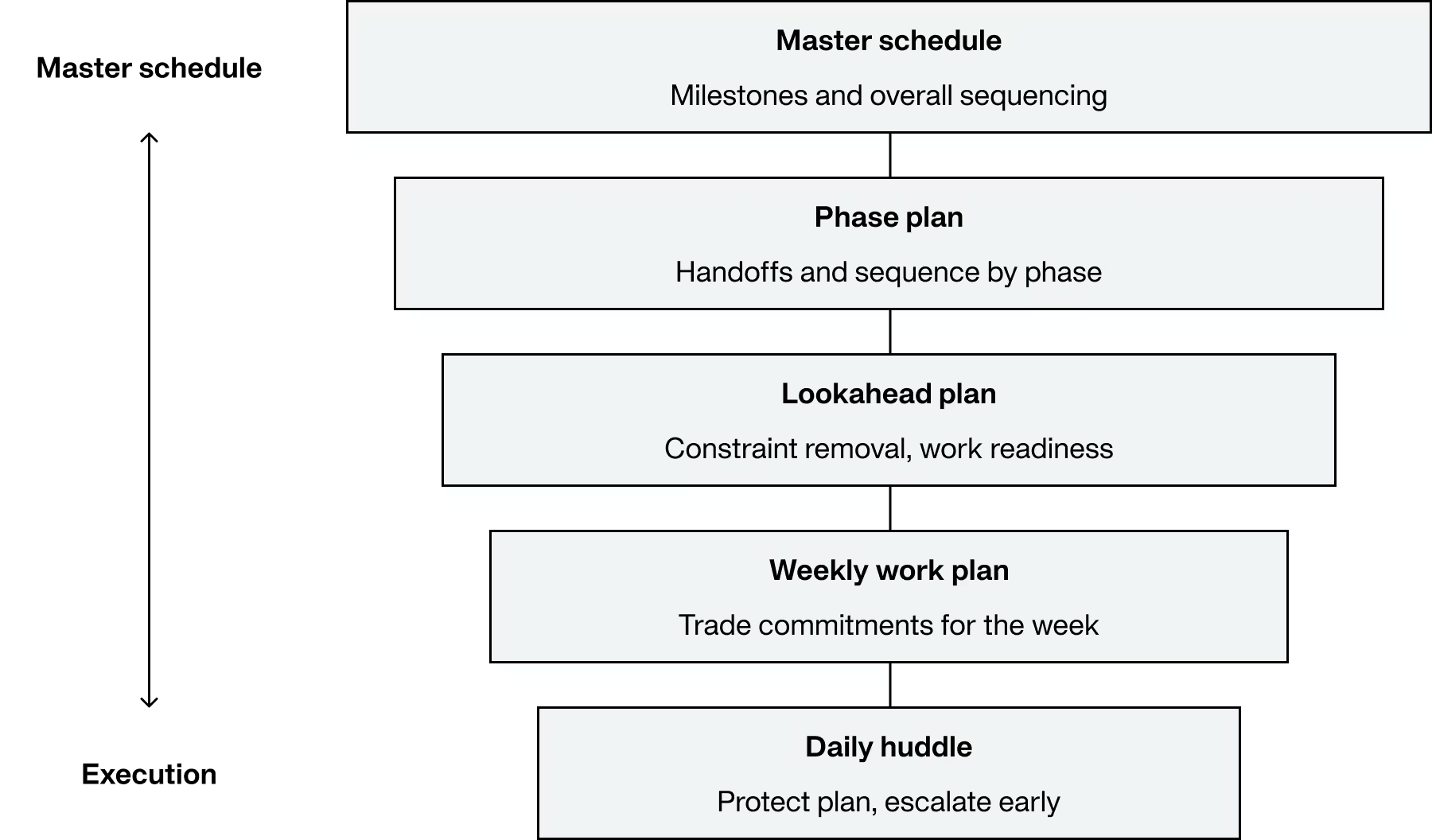
This system does not replace the schedule. It makes the schedule executable.
- The master schedule sets major milestones and overall sequencing.
- The phase plan defines the handoffs and sequence needed in a specific phase or area.
- The lookahead plan removes constraints so upcoming work can be made ready.
- The weekly work plan turns ready work into trade commitments.
- The daily huddle protects the weekly plan and escalates breakdowns early.
Projects lose control when these levels stop connecting. Good schedule transparency means the master schedule, phase plan, lookahead, and weekly work plan are all telling the same story at different levels of detail.
A common response to poor coordination is to share the schedule more often. Weekly lookaheads. Daily updates. Live dashboards.
That helps only if the underlying information is useful.
An activity tells the team what might happen. A commitment tells the team what a trade is prepared to deliver.
What a real commitment looks like
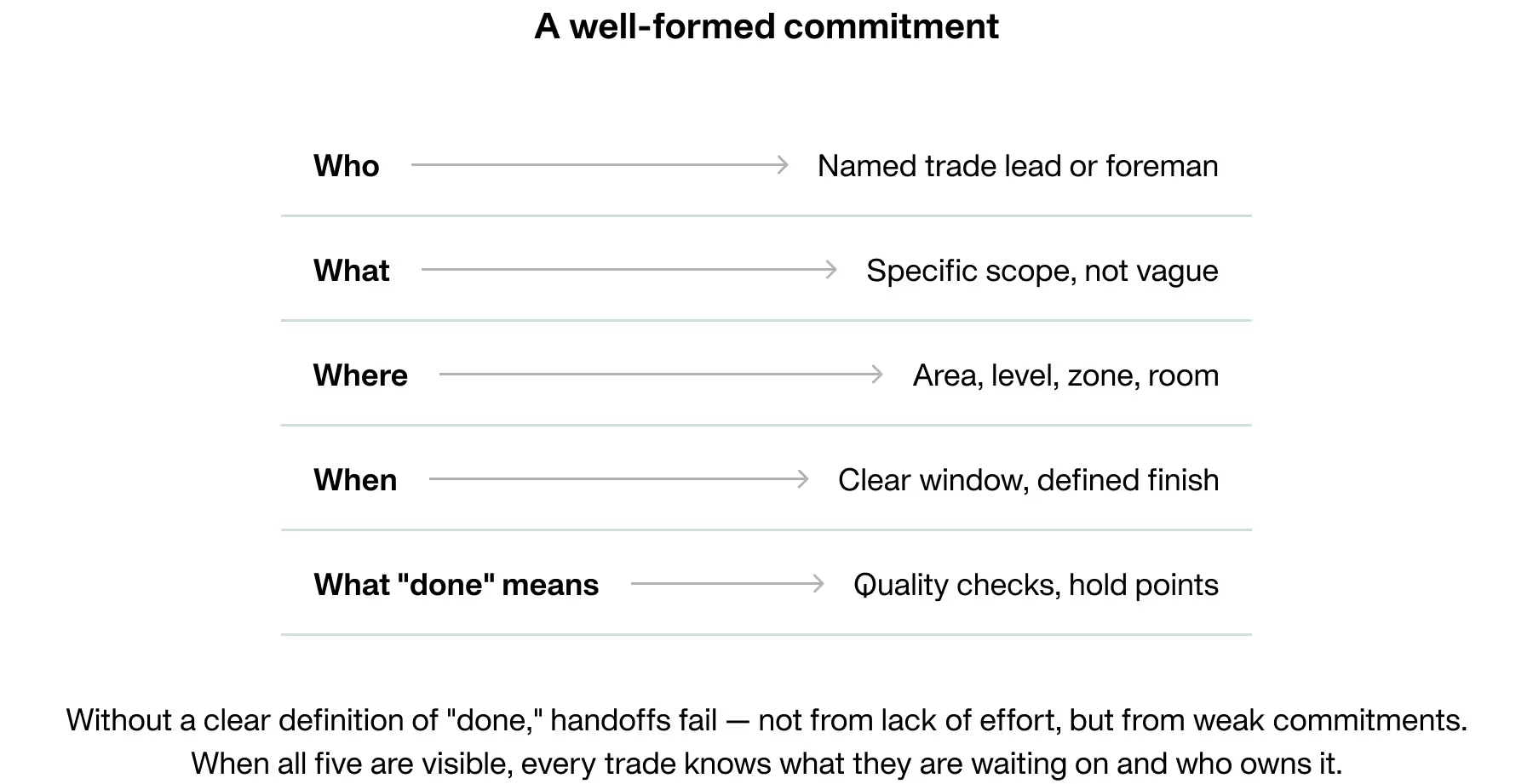
A well-formed commitment includes five things:
- Who owns it. A named foreman, superintendent, or trade lead, not just a company name.
- What will be delivered. Specific scope, not vague language such as “continue framing.”
- Where it will happen. The area, level, zone, or room group.
- When it will be done. A clear time window with a defined finish point.
- What done means. Complete scope, quality checks, required hold points, and readiness for the next trade.
When done is not defined up front, teams create false handoffs. One trade thinks rough-in is complete. The next trade arrives and finds missing backing, failed inspection, incomplete layout, or open punch work. The issue is not effort. The issue is a weak commitment definition.
When commitments are written this way, transparency becomes practical. Everyone can see what they are waiting on, who owns it, and what ready for turnover actually means.
This is where many planning systems fail.
Trades commit to work in a meeting even though the work is not actually ready. The promise gets made to avoid friction in the room. Then it fails in the field.
The fix is not more pressure. The fix is to make readiness visible before the commitment is made.
Five readiness checks every weekly commitment should have
At minimum, each weekly commitment should be screened for these five readiness categories:
- Design. Are the required drawings, RFIs, and field decisions in place?
- Submittals. Are the needed approvals complete and distributed?
- Materials. Are materials on site, or at least released, tracked, and expected in time?
- Access and logistics. Is the area available, sequenced correctly, and supported by the needed logistics, scaffold, lifts, temporary power, or protection?
- Inspection and quality path. Are required hold points understood, internal QC planned, and any required inspection request on the right timeline?
Depending on the project, teams may also need to confirm predecessor work, labor availability, equipment, permits, temporary works, safety conditions, or owner decisions.
The point is simple. A trade should not be asked to make a weekly promise on work that is still blocked by someone else.
When readiness is visible to everyone, teams stop working off private information. They can plan around known blockers, support each other earlier, and escalate before a hidden issue becomes a failed handoff.
Transparency is not something you install once. It is a weekly operating rhythm.
The cadence that works is simple.
Start of week or end of prior week: Weekly commitment planning
In a 30 to 45 minute planning meeting, each trade lead commits to specific deliverables for the coming week. Those commitments should come from a lookahead of work that has been screened and made ready, not from a straight CPM report.
The team should review:
- planned handoffs by area or sequence
- open constraints that still threaten the work
- changes in access, manpower, deliveries, or inspections
- whether each task is defined well enough to be promised
The goal is not to keep every crew busy. The goal is to make reliable promises that support the phase sequence and project milestones.
Daily huddles: Protect the plan
Use a short daily check-in, usually 10 to 15 minutes.
Three questions are enough:
- What is stuck today?
- What changed since yesterday?
- What needs escalation now so tomorrow’s work does not break?
This is where teams protect flow. Daily huddles are not for rebuilding the whole week. They are for surfacing exceptions early.
End of week: Reliability review
This is the step teams skip when pressure rises, and it is the step that creates improvement.
Ask three questions:
- Did we complete the commitments we made?
- If not, what was the reason for variance?
- What needs to change so next week’s promises are more reliable?
Without this review, the weekly plan becomes a short-term coordination exercise. With it, the team starts learning where the system is weak.
How to Fix the Disconnect Between the Office and Field.
Download the report to learn more:
- Learn about the why scheduling and planning fail the field
- Understand the pain points, inefficiencies, and evolving practices shaping scheduling today
- Find out how to bridge critical disconnects happening in construction
Any commitment system will fail if people think the metrics will be used against them.
Once teams believe the data is there to punish, honesty disappears. Constraints stay hidden. Commitments get watered down. Meetings become performance theater.
The purpose of measurement is to improve the system.
Three simple metrics that make the system work
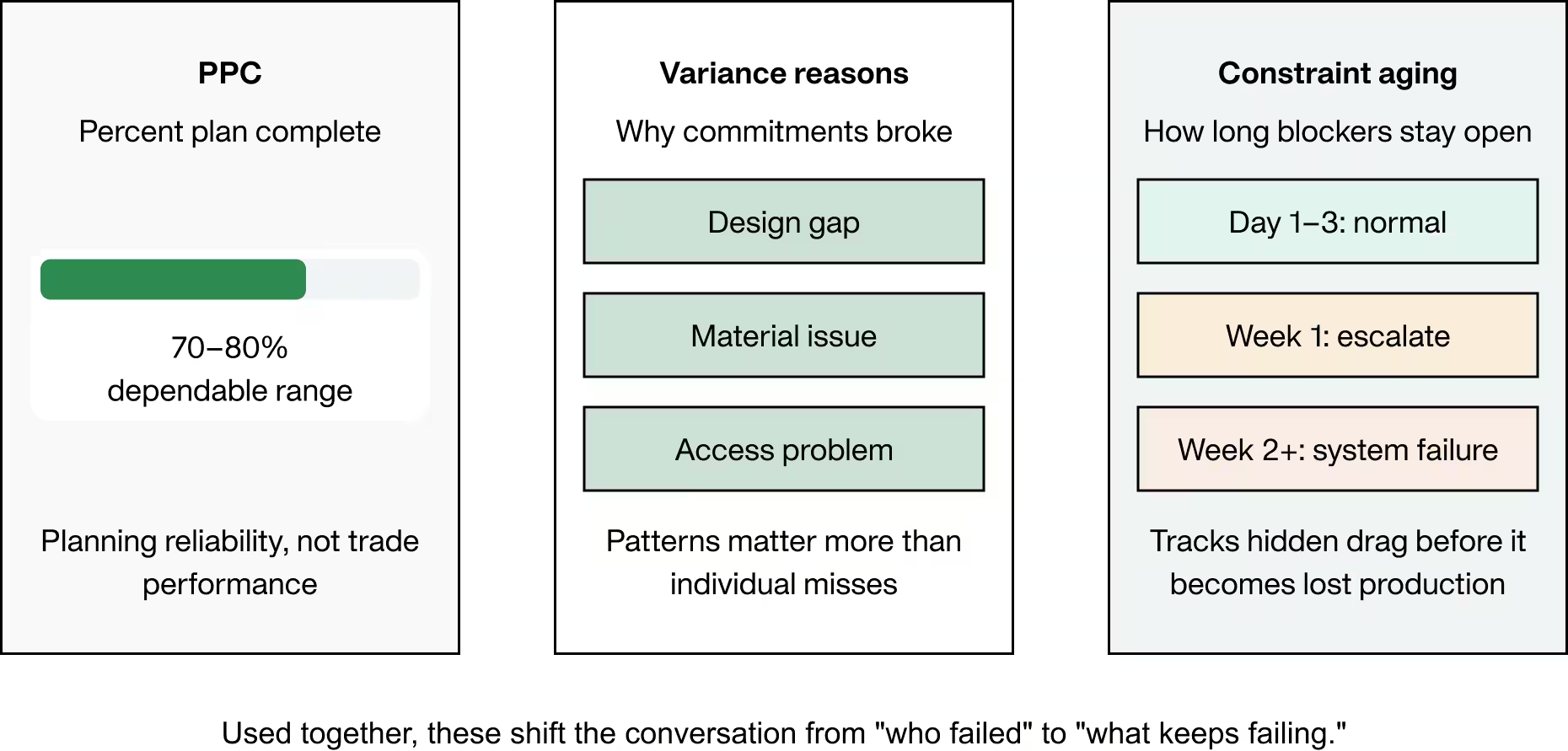
1. Percent plan complete, PPC
PPC measures the share of weekly commitments completed as promised. In Lean construction, it is used as an indicator of planning reliability, not a scorecard for trade performance.
Many LPS references treat roughly 70 to 80 percent as a meaningful range for dependable weekly planning. Repeated near-100 percent results can also be a warning sign that teams are under-committing instead of exposing real production capacity.
PPC should never be read alone. A project can post strong PPC and still struggle if work is not being made ready in the right sequence.
2. Reasons for variance
Every broken commitment should be logged with a reason that the team can act on.
Common categories include:
- design or information gap
- predecessor incomplete
- material issue
- manpower shortage
- access or logistics problem
- equipment issue
- inspection delay
- weather
These categories turn missed commitments into usable intelligence. Over time, the pattern matters more than the individual miss.
3. Constraint aging
How long do blockers stay open before someone clears them?
A constraint that sits for two weeks without a clear owner or escalation path is not a small oversight. It is a system failure. Tracking aging helps the team see hidden drag before it shows up as lost production.
When teams review these metrics together, the conversation changes. It moves from who failed to what keeps failing and what needs to change.
The hard part is not the software. It is the culture.
Many projects still operate in a blame-heavy environment. In that setting, people protect themselves by softening the truth. They overstate readiness, avoid exposing blockers, and make commitments they do not believe.
A working commitment system changes that.
Supers and PMs spend less time reacting and more time leading. Trade partners stop coordinating through side conversations alone. Owners get earlier warning on risk, not because problems disappear, but because problems surface while there is still time to act.
On projects that run collaborative commitment planning well, teams usually see less reactive coordination because constraints, handoffs, and near-term promises are visible to everyone working the plan.
That is what real schedule transparency looks like. Not more reports. A shared production planning system where commitments are visible, constraints are owned, and handoffs are reliable.
You do not need a new platform to start. You need a better planning conversation.
- Build next week’s weekly work plan from trade commitments, not from a straight schedule printout.
- Give every commitment a trade owner, area, scope, finish condition, and known constraints.
- Screen every commitment for readiness before it is promised.
- Run one weekly commitment meeting against the phase sequence, not against isolated trade agendas.
- Hold short daily huddles to protect the weekly plan and escalate breakdowns early.
- Track PPC, reasons for variance, and aging constraints.
- Review misses for learning, not punishment.
- Publish one shared view of commitments, constraints, and changes so no one is working from a private version of the truth.
That is the system.
It is not complicated. It is disciplined.
When commitments are visible and reliable, the job moves with less friction. Trades can plan their week. Field leaders can manage real risk earlier. And the schedule starts to reflect what the project team can actually deliver.
How to Fix the Disconnect Between the Office and Field.
Any commitment system will fail if people think the metrics will be used against them.
Once teams believe the data is there to punish, honesty disappears. Constraints stay hidden. Commitments get watered down. Meetings become performance theater.
The purpose of measurement is to improve the system.
Three simple metrics that make the system work
1. Percent plan complete, PPC
PPC measures the share of weekly commitments completed as promised. In Lean construction, it is used as an indicator of planning reliability, not a scorecard for trade performance.
Many LPS references treat roughly 70 to 80 percent as a meaningful range for dependable weekly planning. Repeated near-100 percent results can also be a warning sign that teams are under-committing instead of exposing real production capacity.
PPC should never be read alone. A project can post strong PPC and still struggle if work is not being made ready in the right sequence.
2. Reasons for variance
Every broken commitment should be logged with a reason that the team can act on.
Common categories include:
- design or information gap
- predecessor incomplete
- material issue
- manpower shortage
- access or logistics problem
- equipment issue
- inspection delay
- weather
These categories turn missed commitments into usable intelligence. Over time, the pattern matters more than the individual miss.
3. Constraint aging
How long do blockers stay open before someone clears them?
A constraint that sits for two weeks without a clear owner or escalation path is not a small oversight. It is a system failure. Tracking aging helps the team see hidden drag before it shows up as lost production.
When teams review these metrics together, the conversation changes. It moves from who failed to what keeps failing and what needs to change.
The hard part is not the software. It is the culture.
Many projects still operate in a blame-heavy environment. In that setting, people protect themselves by softening the truth. They overstate readiness, avoid exposing blockers, and make commitments they do not believe.
A working commitment system changes that.
Supers and PMs spend less time reacting and more time leading. Trade partners stop coordinating through side conversations alone. Owners get earlier warning on risk, not because problems disappear, but because problems surface while there is still time to act.
On projects that run collaborative commitment planning well, teams usually see less reactive coordination because constraints, handoffs, and near-term promises are visible to everyone working the plan.
That is what real schedule transparency looks like. Not more reports. A shared production planning system where commitments are visible, constraints are owned, and handoffs are reliable.
You do not need a new platform to start. You need a better planning conversation.
- Build next week’s weekly work plan from trade commitments, not from a straight schedule printout.
- Give every commitment a trade owner, area, scope, finish condition, and known constraints.
- Screen every commitment for readiness before it is promised.
- Run one weekly commitment meeting against the phase sequence, not against isolated trade agendas.
- Hold short daily huddles to protect the weekly plan and escalate breakdowns early.
- Track PPC, reasons for variance, and aging constraints.
- Review misses for learning, not punishment.
- Publish one shared view of commitments, constraints, and changes so no one is working from a private version of the truth.
That is the system.
It is not complicated. It is disciplined.
When commitments are visible and reliable, the job moves with less friction. Trades can plan their week. Field leaders can manage real risk earlier. And the schedule starts to reflect what the project team can actually deliver.
Frequently Asked Questions
It means every trade sees the same weekly commitments, open constraints, and handoffs by area. It focuses on what crews are ready to deliver, not what a bar chart says.
Because most “shared” plans do not show readiness. Trades show up to areas with missing predecessors, incomplete inspections, or unresolved constraints.
An activity is planned work. A commitment is a promise with an owner, clear scope, a defined location, a finish window, and a shared definition of done.
At minimum: design readiness, submittal approvals, material status, access and logistics, and the inspection and quality path. If any are not ready, the work should not be promised.
Track Percent Plan Complete (PPC), reasons for variance, and constraint aging. Use the data to improve planning and handoffs, not to punish trade partners.


Ready to see Outbuild?
Join hundreds of contractors from 10+ countries that are saving money by scheduling better




We’ll be in touch soon!