

Outbuild is online scheduling software to work together on connected project schedules and look-aheads, enabling everyone to move faster.
Key Takeaways

- Schedules, Lookaheads, and Weekly Work Plans within one integrated platform.
- Real-time insights and project analytics through automated dashboards.
- Easier, streamlined plan management through a user-friendly interface.
Table of contents
- The Real Reason Schedules Drift: Work, Information, and Verification Must Stay Aligned
- Step 1: Define Install-Ready and Stop Starting on Hope
- Step 2: Link Every Information Gate to the Work It Enables
- Step 3: Put Ownership and Need-By Dates on Gates, Not Just Activities
- Step 4: Constraints First, Commitments Second
- From Tracking to Control
- Do This Monday: A Field-Ready Checklist
The crew is ready. The sequence is set. The schedule says start Monday. And then the RFI that was supposed to resolve the embed location is still open, the submittal for the specialty hardware has not come back from the engineer, and the inspection from last week’s rough-in has not been signed off yet.
The schedule is not late. The information is. And the field pays for it anyway.
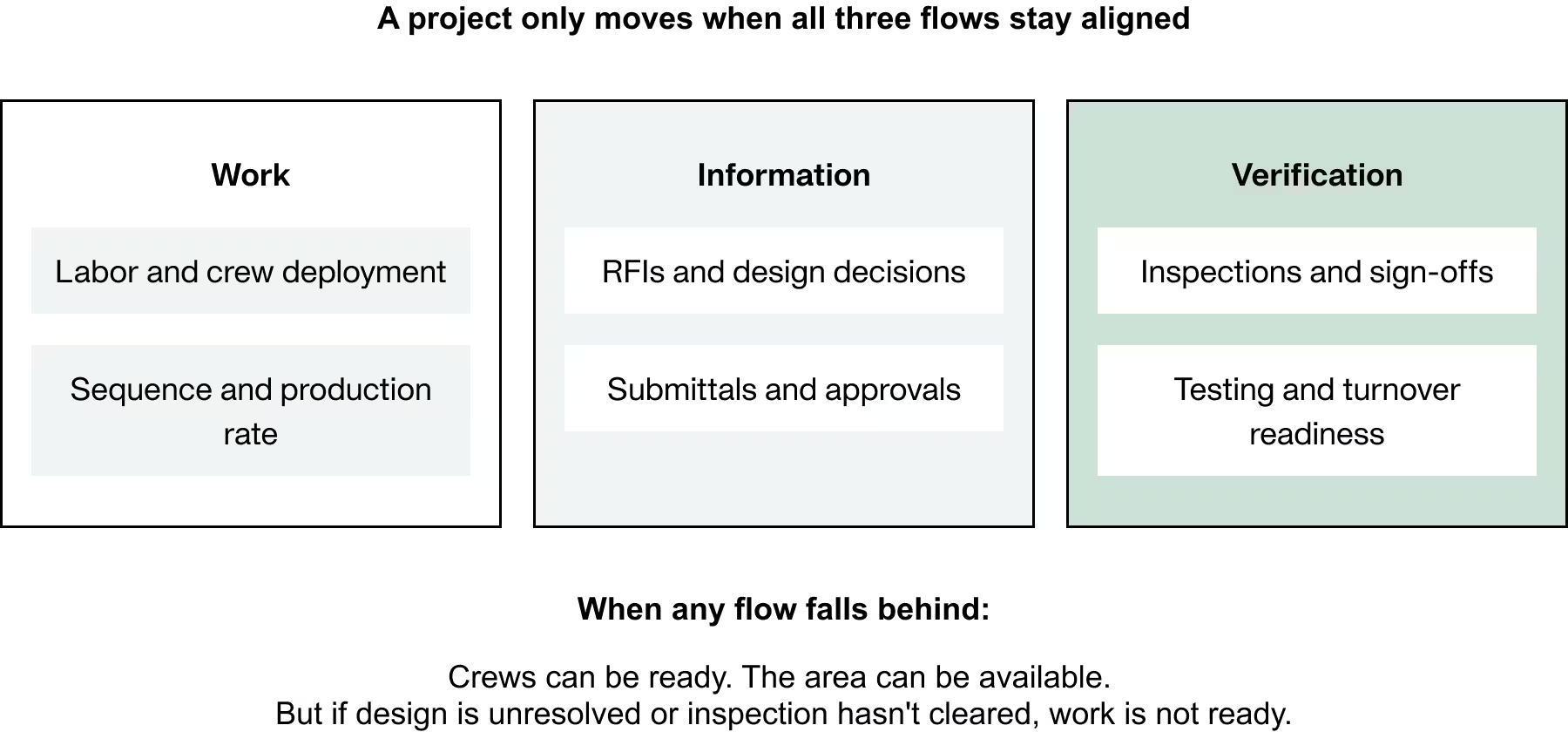
A useful way to think about schedule readiness is through three linked flows:
- Work: labor, sequence, production rate, crew deployment
- Information: RFIs, submittals, design decisions, engineer responses
- Verification: inspections, testing, sign-offs, turnover readiness
A project only moves when all three stay aligned.
Crews can be ready. The area can be available. But if design information is unresolved or the required inspection has not cleared, the work is still not ready. That is where schedules drift without anyone intending them to.
Synchronization does not mean more updates. It means building clear dependencies between these three flows so the schedule reflects actual readiness, not planned intent.
The one-sentence answer
Turn RFIs, submittals, and inspections into managed checkpoints with owners and need-by dates, link those checkpoints to the exact activities, handoffs, or milestone-driving sequences they enable, and review them weekly as constraints that must be cleared before commitments are made.
That is what makes a schedule reflect the truth instead of hope.
How to Fix the Disconnect Between the Office and Field.
Download the report to learn more:
- Learn about the why scheduling and planning fail the field
- Understand the pain points, inefficiencies, and evolving practices shaping scheduling today
- Find out how to bridge critical disconnects happening in construction
The most common synchronization failure is not a single missed RFI or late submittal. It is a team scheduling an installation activity before the conditions for that activity are actually in place, then discovering the gap when the crew shows up.
In this article, install-ready means the work has passed the make-ready checks required for that specific activity.
What install-ready looks like
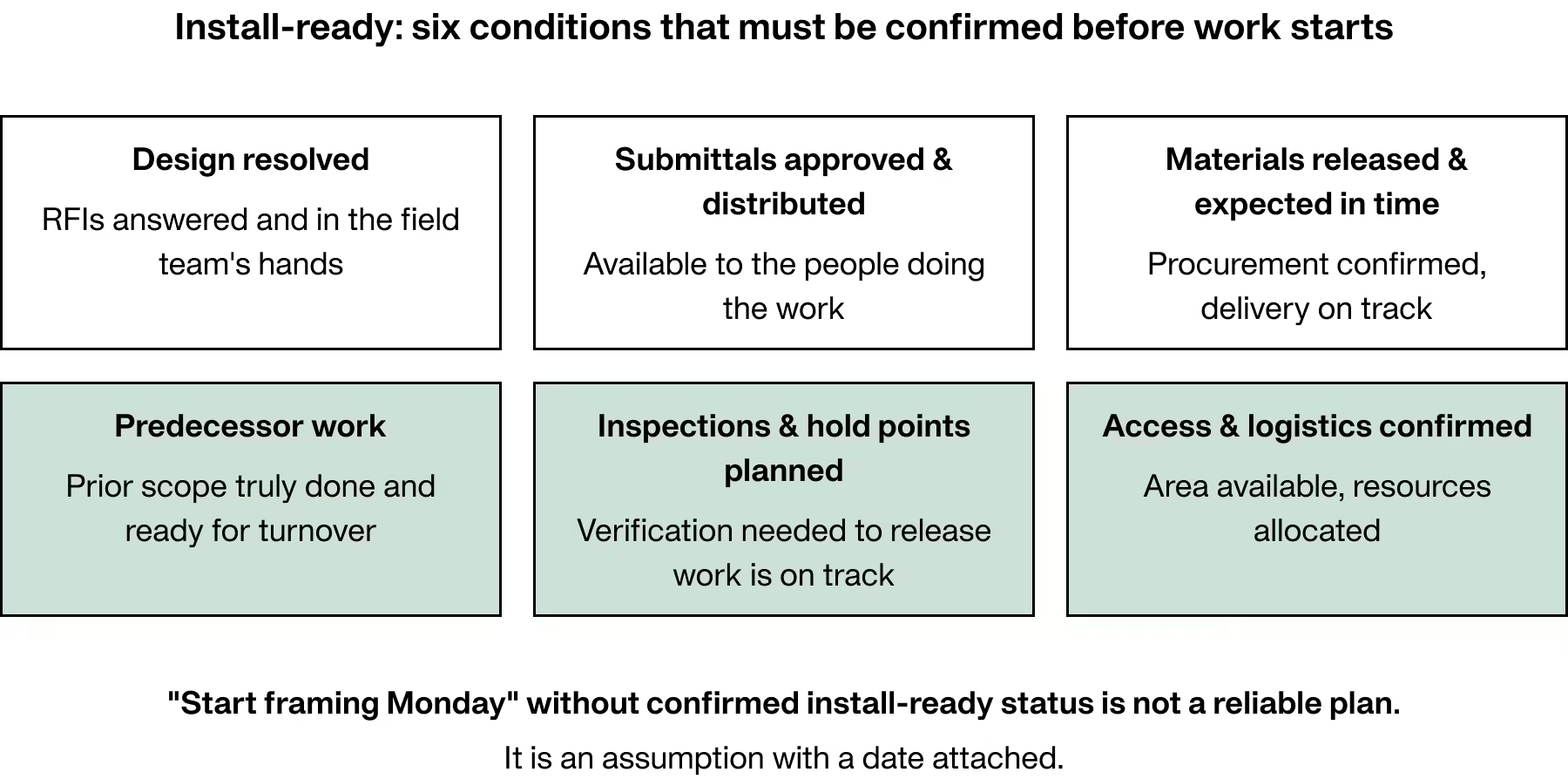
For critical work, install-ready usually means these conditions have been confirmed:
- Design resolved: the RFIs relevant to the scope are answered and the answer is in the field team’s hands
- Submittals approved and distributed: shop drawings or product data are approved and available to the people doing the work
- Materials released and expected in time: procurement is confirmed and delivery is on track to support the sequence
- Predecessor work complete: the prior scope is actually complete and ready for turnover
- Required inspections or hold points planned: the verification needed to release or support the work is identified and on track
- Access and logistics confirmed: the area is available, the sequence is understood, and shared resources are allocated
The cost of finding an unresolved condition in the field is not just the correction. It is the rework, the inspection delay, the crew disruption, and the broken handoff that follows.
A schedule that says “start framing Monday” without confirmed install-ready status is not a reliable plan. It is an assumption with a date attached.
Once install-ready criteria are defined, the next step is structural. Every RFI, submittal, and inspection should be linked to the specific activity, handoff, or milestone-driving sequence it enables.
That is where many teams stop short. RFIs are tracked in one place. Submittals in another. Inspections in another. The schedule lives somewhere else. The connection between them often depends on memory and side conversations.
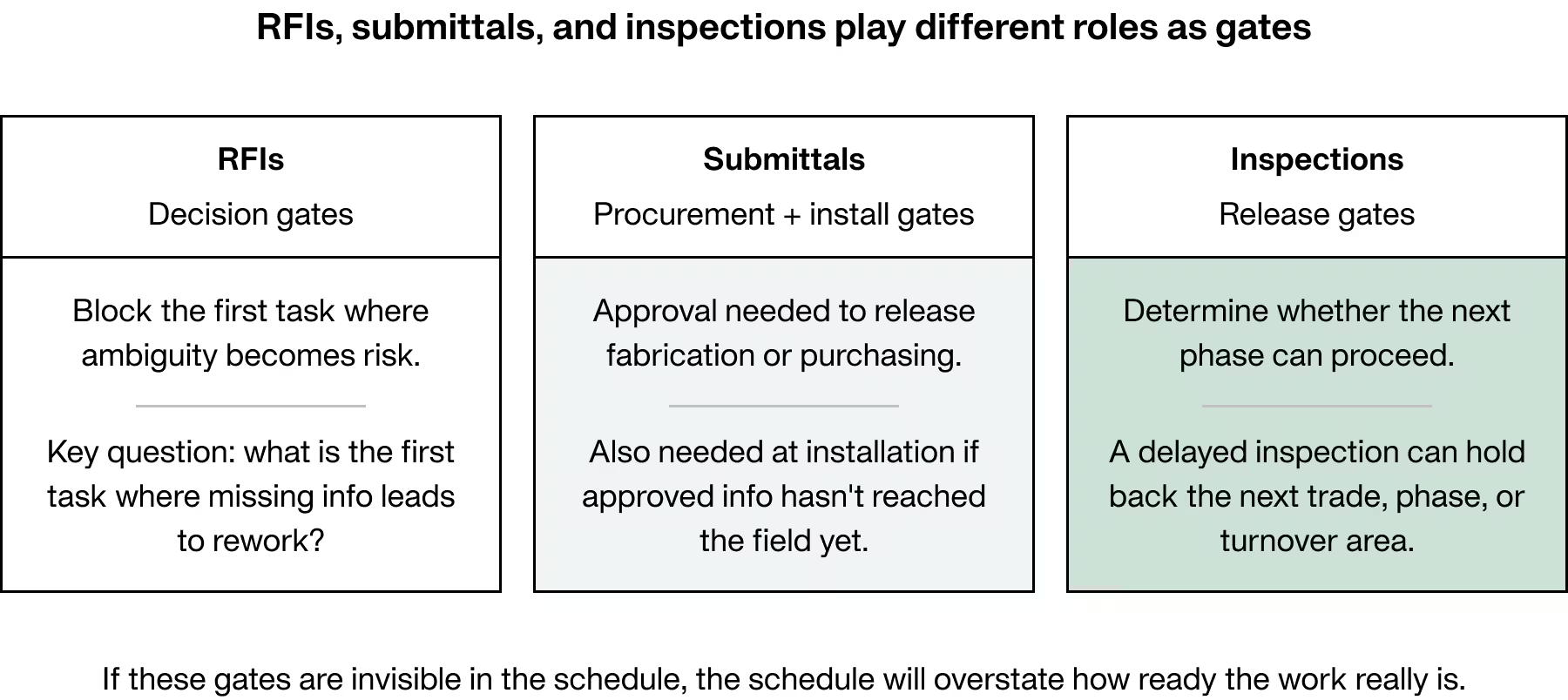
RFIs, submittals, and inspections play different roles
Each type of gate affects the work in a different way.
RFIs are decision gates. They block the first activity where ambiguity becomes risk. The question is not just whether the RFI is open. The question is: what is the first task where the missing answer could lead to wrong work or rework?
Submittals are both procurement and installation gates. Approval may be needed to release fabrication or purchasing of long-lead items, but it may also be needed again at installation if the approved information has not reached the field or if revisions are still unresolved.
Inspections often act as release gates. They do not just confirm completed work. They often determine whether the next phase can legally, contractually, or practically proceed.
A delayed or failed inspection can affect more than the work being inspected. It can hold back the next trade, the next phase, or the next turnover area.
For high-risk work, the schedule should reflect not only the installation activity but also the information and verification gates that truly control readiness. If those gates are invisible, the schedule will overstate how ready the work really is.
A gate that is linked but not owned is just documentation. A gate that has an owner but no due date is still only intention.
The combination of one owner, one need-by date, and weekly status is what turns an information gate into a managed constraint.
The need-by date is not the same as the activity start date. It is the last date the information or verification gate can close while still allowing time for field distribution, review, staging, and start readiness.
What better language sounds like
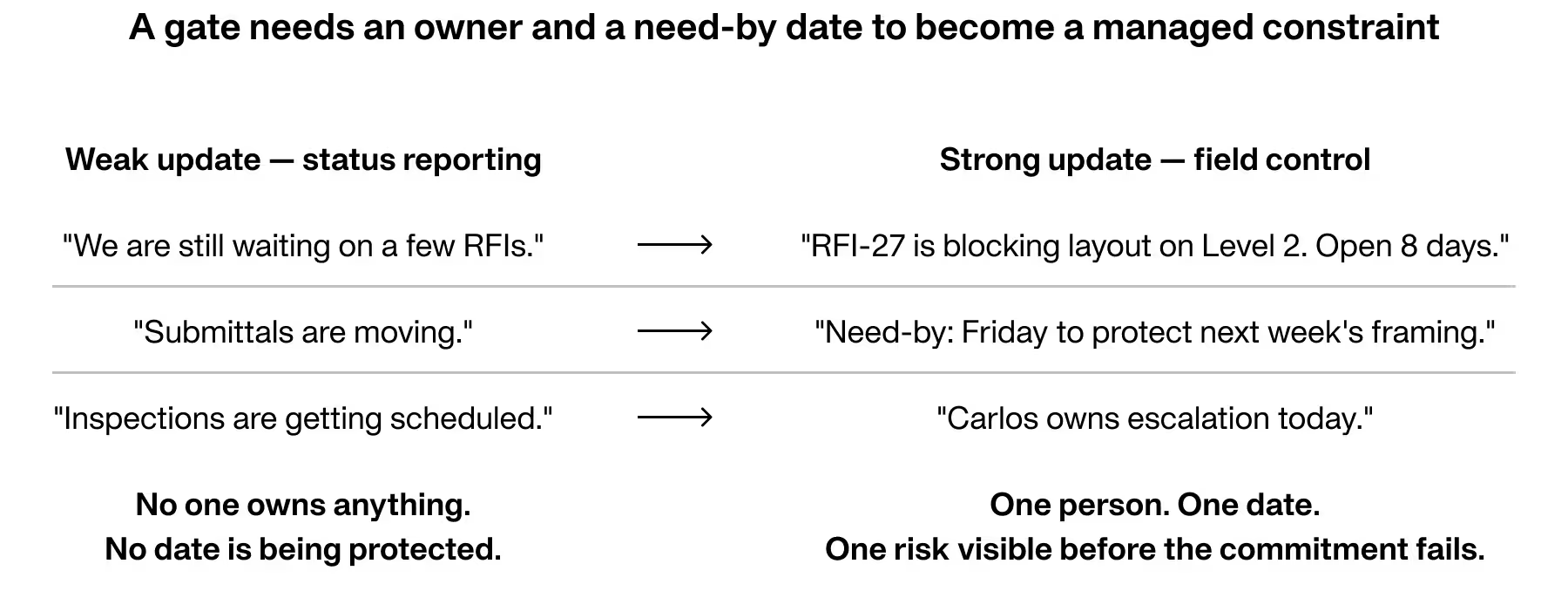
A weak weekly update sounds like this:
“We are still waiting on a few RFIs. Submittals are moving. Inspections are getting scheduled.”
That language does not help the field protect anything.
A stronger update sounds like this:
“RFI-27 is blocking layout on Level 2. It has been open eight days. The need-by date is Friday to protect next week’s framing commitment. Carlos owns the escalation today.”
That is a field-control statement. One person has an action. One date is being protected. One risk is visible before the commitment fails.
When every gate has an owner and a need-by date, the weekly review stops being general status reporting and becomes practical constraint management.
The order of the weekly lookahead planning conversation matters.
Most teams review last week, then talk about next week. A stronger sequence is to review constraints first, then make commitments.
Work should enter the weekly plan only when the team believes it both should be done and can be done.
The weekly cadence that makes synchronization real
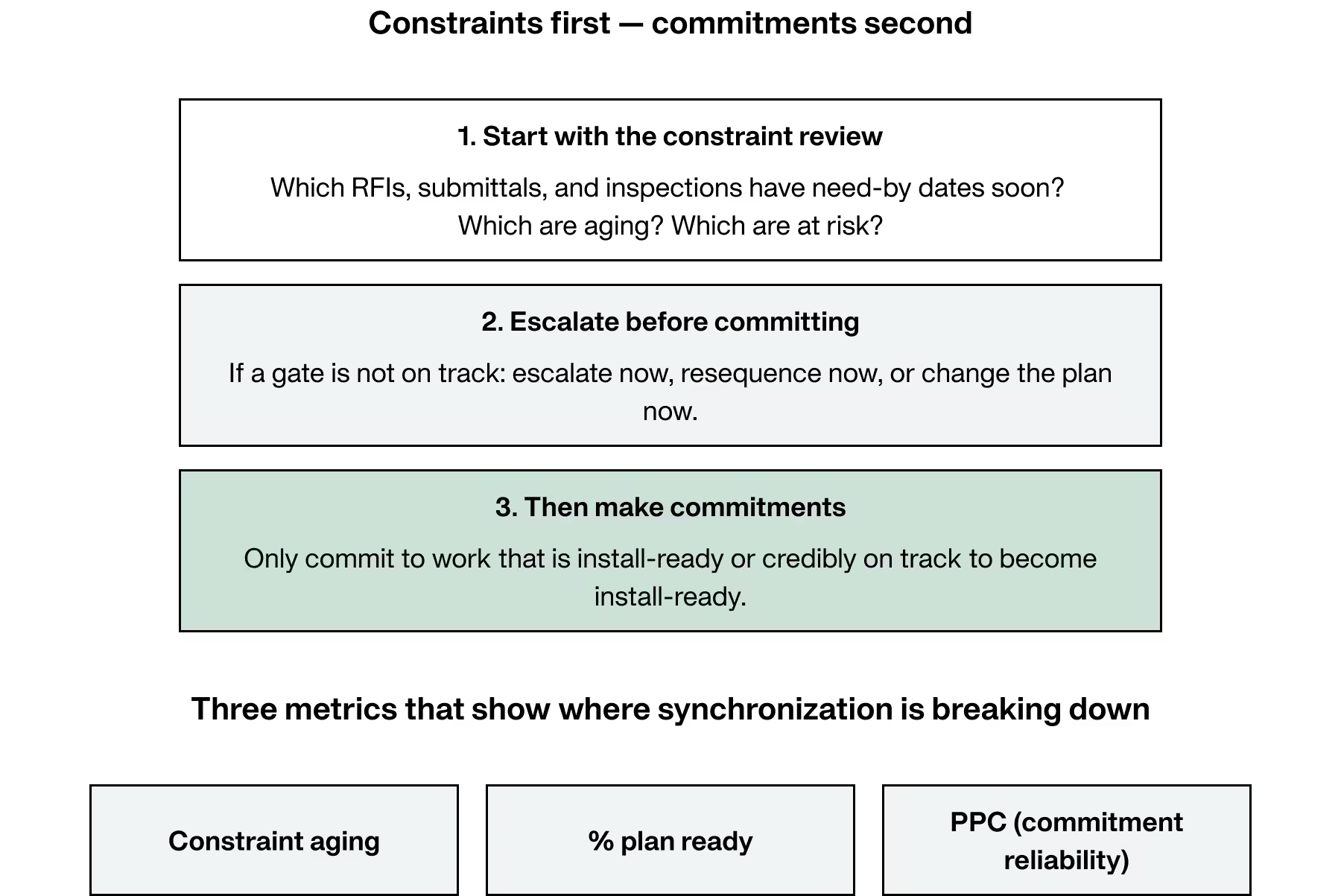
A practical constraint-first workflow looks like this:
- Start with the constraint review. Which RFIs, submittals, and inspections have need-by dates in the next two to three weeks? Which are aging? Which are at risk?
- Escalate before committing. If a gate is not on track to clear in time, escalate it now, resequence now, or change the plan now.
- Then make commitments. Only commit to work that is install-ready or credibly on track to become install-ready in time.
That sequence matters because a commitment made without realistic constraint clearance is not a commitment. It is optimism dressed as planning.
Metrics that help the team see the pattern
Three simple metrics to measure schedule health can help the team see where synchronization is breaking down.:
- Constraint aging: how long do gates stay open before resolution?
- Percent plan ready: what share of next week’s planned activities have confirmed install-ready status before commitments are made?
- Commitment reliability, PPC: did the team do what it said it would do, and were unresolved constraints part of the reason when it did not?
Together, these metrics help show whether the problem is information flow, readiness checking, or weekly plan reliability.
There is a real difference between tracking RFIs, submittals, and inspections and controlling them as schedule dependencies.
Tracking tells you the status of each item in its own log or system. Control ties each item to the work it enables, assigns it an owner and a need-by date, surfaces it in the weekly planning rhythm, and triggers action before the field feels the miss.
That is the difference between reactive administration and proactive production control.
The payoff is not just fewer surprises. It is a field team that can trust the plan because the plan reflects actual readiness.
The best schedule is not the most detailed one. It is the one the field can trust.
Pick three to five critical activities starting in the next two to three weeks. For each one, run the full synchronization sequence.
- Define the install-ready criteria for that activity.
- Identify the specific RFIs, submittals, and inspections that must close before it can start.
- Calculate the need-by dates by working backward from the activity start and readiness window.
- Assign one owner per gate.
- Review those gates before making next week’s commitments.
- Only commit to work where install-ready is confirmed or credibly on track.
Do that for three activities this week.
The discipline it creates, clear gates, owned deadlines, and constraint-first planning, is the same discipline that scales to the full project.
The schedule is not late. The information is. And information, unlike schedule dates, can be managed if it is visible, owned, and tied to the work it enables.
How to Fix the Disconnect Between the Office and Field.
The most common synchronization failure is not a single missed RFI or late submittal. It is a team scheduling an installation activity before the conditions for that activity are actually in place, then discovering the gap when the crew shows up.
In this article, install-ready means the work has passed the make-ready checks required for that specific activity.
What install-ready looks like
For critical work, install-ready usually means these conditions have been confirmed:
- Design resolved: the RFIs relevant to the scope are answered and the answer is in the field team’s hands
- Submittals approved and distributed: shop drawings or product data are approved and available to the people doing the work
- Materials released and expected in time: procurement is confirmed and delivery is on track to support the sequence
- Predecessor work complete: the prior scope is actually complete and ready for turnover
- Required inspections or hold points planned: the verification needed to release or support the work is identified and on track
- Access and logistics confirmed: the area is available, the sequence is understood, and shared resources are allocated
The cost of finding an unresolved condition in the field is not just the correction. It is the rework, the inspection delay, the crew disruption, and the broken handoff that follows.
A schedule that says “start framing Monday” without confirmed install-ready status is not a reliable plan. It is an assumption with a date attached.
Once install-ready criteria are defined, the next step is structural. Every RFI, submittal, and inspection should be linked to the specific activity, handoff, or milestone-driving sequence it enables.
That is where many teams stop short. RFIs are tracked in one place. Submittals in another. Inspections in another. The schedule lives somewhere else. The connection between them often depends on memory and side conversations.
RFIs, submittals, and inspections play different roles
Each type of gate affects the work in a different way.
RFIs are decision gates. They block the first activity where ambiguity becomes risk. The question is not just whether the RFI is open. The question is: what is the first task where the missing answer could lead to wrong work or rework?
Submittals are both procurement and installation gates. Approval may be needed to release fabrication or purchasing of long-lead items, but it may also be needed again at installation if the approved information has not reached the field or if revisions are still unresolved.
Inspections often act as release gates. They do not just confirm completed work. They often determine whether the next phase can legally, contractually, or practically proceed.
A delayed or failed inspection can affect more than the work being inspected. It can hold back the next trade, the next phase, or the next turnover area.
For high-risk work, the schedule should reflect not only the installation activity but also the information and verification gates that truly control readiness. If those gates are invisible, the schedule will overstate how ready the work really is.
A gate that is linked but not owned is just documentation. A gate that has an owner but no due date is still only intention.
The combination of one owner, one need-by date, and weekly status is what turns an information gate into a managed constraint.
The need-by date is not the same as the activity start date. It is the last date the information or verification gate can close while still allowing time for field distribution, review, staging, and start readiness.
What better language sounds like
A weak weekly update sounds like this:
“We are still waiting on a few RFIs. Submittals are moving. Inspections are getting scheduled.”
That language does not help the field protect anything.
A stronger update sounds like this:
“RFI-27 is blocking layout on Level 2. It has been open eight days. The need-by date is Friday to protect next week’s framing commitment. Carlos owns the escalation today.”
That is a field-control statement. One person has an action. One date is being protected. One risk is visible before the commitment fails.
When every gate has an owner and a need-by date, the weekly review stops being general status reporting and becomes practical constraint management.
The order of the weekly lookahead planning conversation matters.
Most teams review last week, then talk about next week. A stronger sequence is to review constraints first, then make commitments.
Work should enter the weekly plan only when the team believes it both should be done and can be done.
The weekly cadence that makes synchronization real
A practical constraint-first workflow looks like this:
- Start with the constraint review. Which RFIs, submittals, and inspections have need-by dates in the next two to three weeks? Which are aging? Which are at risk?
- Escalate before committing. If a gate is not on track to clear in time, escalate it now, resequence now, or change the plan now.
- Then make commitments. Only commit to work that is install-ready or credibly on track to become install-ready in time.
That sequence matters because a commitment made without realistic constraint clearance is not a commitment. It is optimism dressed as planning.
Metrics that help the team see the pattern
Three simple metrics to measure schedule health can help the team see where synchronization is breaking down.:
- Constraint aging: how long do gates stay open before resolution?
- Percent plan ready: what share of next week’s planned activities have confirmed install-ready status before commitments are made?
- Commitment reliability, PPC: did the team do what it said it would do, and were unresolved constraints part of the reason when it did not?
Together, these metrics help show whether the problem is information flow, readiness checking, or weekly plan reliability.
There is a real difference between tracking RFIs, submittals, and inspections and controlling them as schedule dependencies.
Tracking tells you the status of each item in its own log or system. Control ties each item to the work it enables, assigns it an owner and a need-by date, surfaces it in the weekly planning rhythm, and triggers action before the field feels the miss.
That is the difference between reactive administration and proactive production control.
The payoff is not just fewer surprises. It is a field team that can trust the plan because the plan reflects actual readiness.
The best schedule is not the most detailed one. It is the one the field can trust.
Pick three to five critical activities starting in the next two to three weeks. For each one, run the full synchronization sequence.
- Define the install-ready criteria for that activity.
- Identify the specific RFIs, submittals, and inspections that must close before it can start.
- Calculate the need-by dates by working backward from the activity start and readiness window.
- Assign one owner per gate.
- Review those gates before making next week’s commitments.
- Only commit to work where install-ready is confirmed or credibly on track.
Do that for three activities this week.
The discipline it creates, clear gates, owned deadlines, and constraint-first planning, is the same discipline that scales to the full project.
The schedule is not late. The information is. And information, unlike schedule dates, can be managed if it is visible, owned, and tied to the work it enables.
Frequently Asked Questions
It means building clear dependencies between three flows — work, information, and verification — so the schedule reflects actual readiness instead of planned intent. Synchronization isn't about logging more updates; it's about turning RFIs, submittals, and inspections into managed checkpoints tied to the exact activities they enable.
A project only moves when work, information, and verification stay aligned. The crew can be ready and the area available, but if an RFI is unresolved or a required inspection hasn't cleared, the work still isn't ready. That gap is where schedules drift without anyone intending it — and the field pays for it anyway.
Install-ready means an activity has passed the make-ready checks specific to that work: relevant RFIs answered and in the field's hands, submittals approved and distributed, materials released and on track, predecessor work complete, required inspections planned, and access and logistics confirmed. A start date without confirmed install-ready status is an assumption, not a plan.
Tie each to the first activity that becomes risky without it. Link RFIs to the task where an unanswered question gets expensive — like layout or embed install, not just "before MEP rough." Tie submittals to procurement and fabrication and to install start. Tie inspections to the work they verify and the work they release.
Not the raw count of open RFIs. The signals that matter are constraint aging, percent plan ready, and commitment reliability. These tell you whether constraints are being cleared in time to protect upcoming commitments — the real test of a trustworthy schedule.




Ready to see Outbuild?
Join hundreds of contractors from 10+ countries that are saving money by scheduling better





We’ll be in touch soon!