


Outbuild is online scheduling software to work together on connected project schedules and look-aheads, enabling everyone to move faster.
Key Takeaways

- Schedules, Lookaheads, and Weekly Work Plans within one integrated platform.
- Real-time insights and project analytics through automated dashboards.
- Easier, streamlined plan management through a user-friendly interface.
Table of contents
- The Real Problem Is Not Procurement Alone, It Is Disconnection
- Reframe: Dependencies Are Logic Relationships and Human Commitments
- Step 1: Tie Long-Lead Items Directly to the Milestones and Installation Work They Enable
- Step 2: Make Procurement Constraints Visible in Lookahead Planning
- Step 3: Review Near-Term Procurement Dependencies Weekly
- Why This Matters in the Field
- Do This Monday: A Field-Ready Checklist
The switchgear was ordered on time. The submittal was approved. The delivery date was in the procurement log. And still, when the electrical rough-in window opened, the gear was not there, and three weeks of critical path work came to a stop.
Nobody missed a date in isolation. The problem was that procurement status, installation logic, and field planning were not being managed in one connected workflow.
That is where long-lead risk becomes expensive.

On many projects, long-lead tracking and schedule management still run on separate tracks.
The procurement log lives in a spreadsheet, software tool, or email trail. The CPM schedule is stuck in a legacy platform. Weekly commitments live in field planning meetings. Procurement updates happen between the PM, vendor, and design team, often without the superintendent seeing the risk in time to adjust the sequence.
Everything may be documented. That does not mean it is connected.
The result is familiar. A long-lead item has a known lead time. The order was placed. The expected delivery date exists. But the item still arrives after the installation window has already started closing, because the procurement chain was not tied closely enough to the schedule logic and field sequence.
Long-lead items do not become dangerous only when they are late. They become dangerous when they are disconnected from execution, when the field does not feel the risk until it is standing in front of an empty equipment pad, a missing air handler, or a delayed elevator package.
A dependency in a CPM schedule is a logic relationship. One activity must happen before another can start or finish.
But in real construction execution, that same dependency is also a commitment between people. A vendor commits to a fabrication or delivery date. A PM commits to moving submittals and approvals. A superintendent commits to sequencing work around that expected readiness.
Both sides matter.
The logic shows how the work connects. The commitment determines whether that connection will actually hold in the field.
That is why dependency tracking cannot stop at a logic tie inside a schedule file. The team also needs a shared, visible record of what was promised, by whom, by when, and whether the conditions for that promise are still intact.
When a submittal slips two weeks, the question is not only whether the schedule needs an update. The real questions are more immediate:
- What milestone does this affect?
- What installation window does it threaten?
- Who needs to know now?
- How much time does the field have to adjust the sequence before the impact reaches the critical path?
Those are field control questions, not just schedule file questions.
The workflow in one sentence
Tie long-lead items to the milestones and installation work they enable, make their needed-by dates and risks visible in lookahead planning, and review near-term procurement dependencies weekly so the field can adjust before a delivery risk becomes a schedule delay.
That workflow closes the gaps that most projects leave open.
The first gap is structural. Long-lead items are often tracked separately from the milestones and installation sequences they protect.
Closing that gap means making procurement status a direct input to milestone health.
For every major long-lead item that affects milestone-driving work, one question should be answered clearly:
Which milestone, area, or installation sequence is this item protecting?
That answer should not live only in someone’s head. It should be visible in the schedule and in the team’s planning process.
What “tied” means in practice
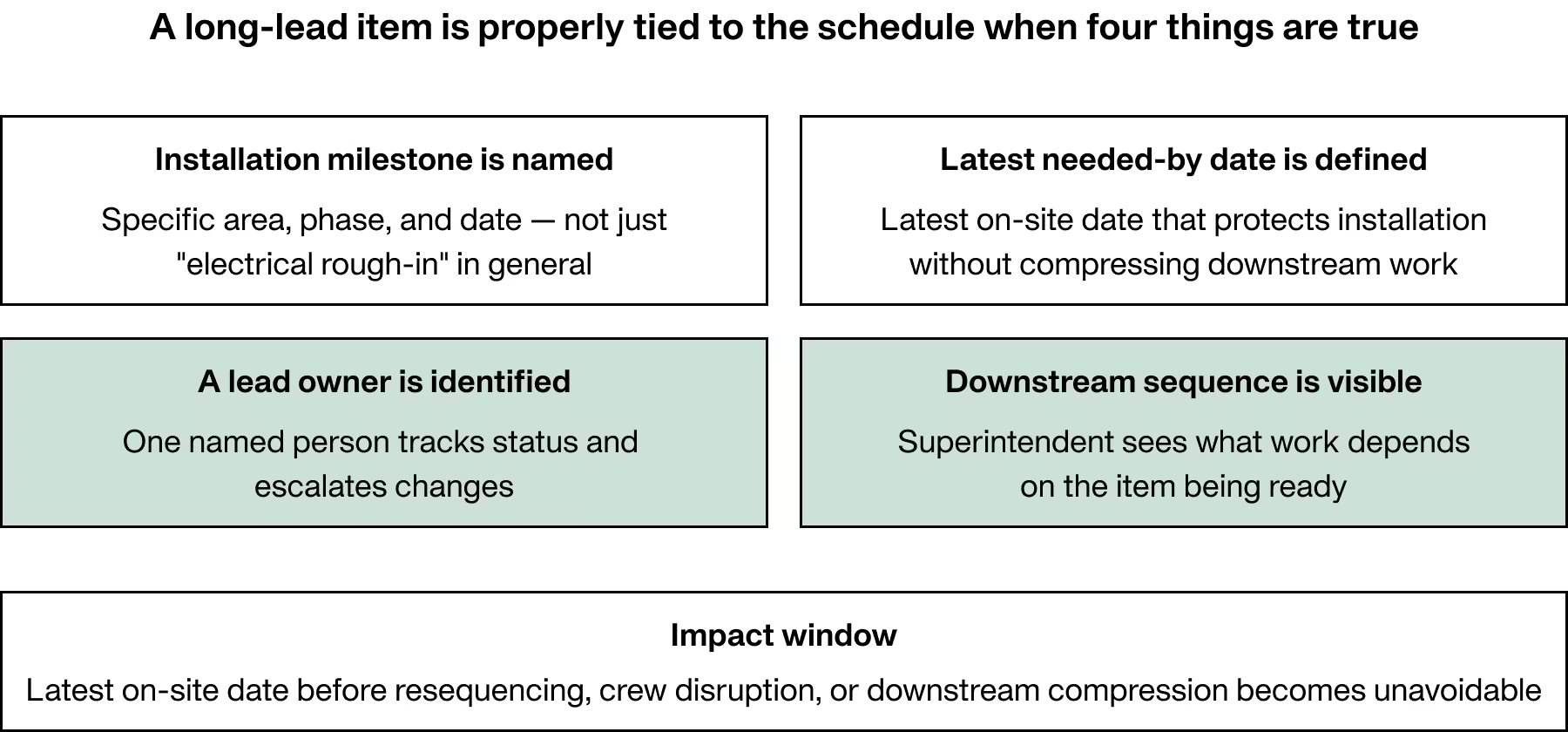
A long-lead item is properly tied to the schedule when four things are true:
- The installation milestone or handoff is named. Not just “electrical rough-in” in general, but the specific area, phase, and date the item enables.
- The latest needed-by date is defined. The team knows the latest on-site date that still protects installation without compressing downstream work.
- A lead owner is identified. One person is responsible for tracking status and escalating changes.
- The downstream field sequence is visible. The superintendent can see what work depends on the item being ready.
A useful planning concept here is the impact window, the latest on-site date that still protects installation without forcing resequencing, crew disruption, or downstream compression.
That is not always the same as the vendor’s delivery date. The field may need time for receipt, inspection, staging, hoisting, assembly, or startup preparation before the item is truly ready for use.
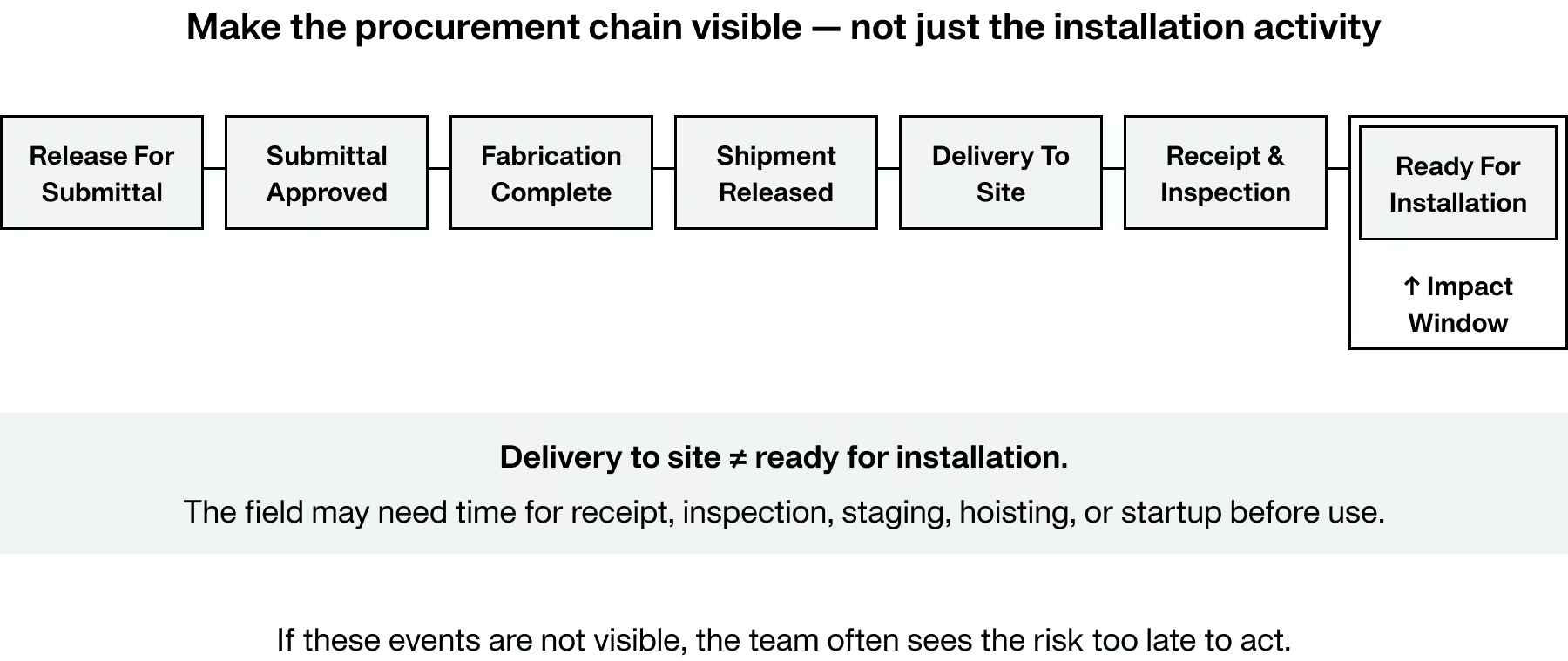
Make the procurement chain visible too
For major equipment, the schedule should show more than the installation activity.
The procurement chain itself should be broken into visible events such as:
- release for submittal
- submittal returned and approved
- fabrication complete
- shipment released
- delivery to site
- receipt and inspection
- ready for installation
If those events are not visible, the team often sees the risk too late.
The second gap is timing.
Procurement risk is often tracked at the project level, while field planning happens at the weekly level. That is why a long-lead issue can sit in the background for months and then suddenly show up as an immediate field problem.
Lookahead planning is where that gap should close.
A lookahead is only useful if it includes both upcoming work and the constraints that must be cleared to make that work ready.
For long-lead items, that means the field should see not only the expected delivery date, but also the latest needed-by date that still protects the sequence.
What the Superintendent needs to see
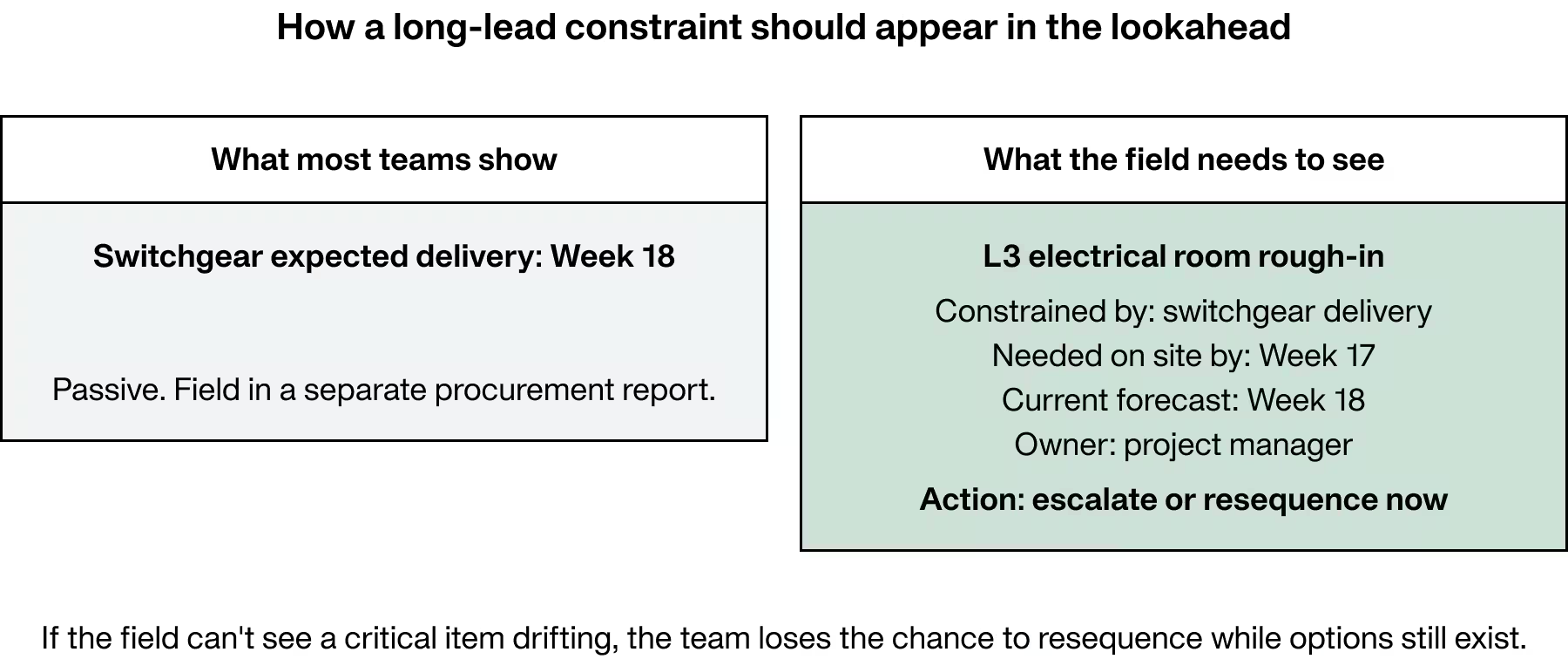
When a long-lead item enters the lookahead horizon, it should appear as a visible constraint on the activity or handoff it threatens.
Not in a separate procurement report. On the work the field is actively planning.
For example, instead of a note that says:
- switchgear expected delivery: Week 18
The field view should say something like:
- Level 3 electrical room rough-in, constrained by switchgear
- needed on site by Week 17 to protect installation
- current delivery forecast Week 18
- owner: project manager
- action needed this week: vendor escalation or resequencing review
That changes the conversation.
If the field cannot see that a critical item is drifting before its needed-by date, the team loses the chance to resequence while options still exist.
Use the Lookahead horizon correctly
On many projects, lookahead planning works best when it is far enough ahead to clear constraints and close enough to support real field decisions.
Lean references commonly describe lookahead windows in the 3 to 12 week range, with six weeks often preferred on many projects.
A practical way to manage review cadence is to increase attention as each item gets closer to its impact window. Items far from their needed-by date may only need periodic review. Items approaching that window should move into active weekly visibility.
That prevents the weekly planning meeting from turning into a full procurement review while still keeping near-term supply risks visible to the people sequencing the work.
The third gap is cadence.
Many teams review long-lead status in monthly procurement meetings. That is useful, but it is not enough for items approaching field impact. Near-term procurement dependencies need to be reviewed weekly where commitments are being made.
This is not about adding a separate meeting. It is about adding one practical question to the planning rhythm that already exists:
Which procurement constraints are approaching their needed-by dates, and are they still on track?
How the weekly conversation should sound
A monthly procurement conversation often sounds like this:
“The switchgear is delayed six weeks.”
By that point, the team is already reacting.
A weekly dependency conversation sounds more like this:
“The switchgear is needed on site by Week 17 to protect the Week 18 installation sequence. Current forecast is Week 18. We still have time to escalate, adjust the sequence, or protect adjacent work.”
That is a different kind of meeting.
The team is not just reporting status. It is making choices while options still exist.
How to Fix the Disconnect Between the Office and Field.
Download the report to learn more:
- Learn about the why scheduling and planning fail the field
- Understand the pain points, inefficiencies, and evolving practices shaping scheduling today
- Find out how to bridge critical disconnects happening in construction
A practical review cadence
Not every long-lead item needs the same review frequency.
A practical operating rule is to increase review cadence as the item gets closer to its impact window. For example:
- items well outside the near-term impact window may be reviewed monthly
- items moving into the medium-term window may be reviewed every other week
- items within roughly the next six weeks of field impact should usually be reviewed weekly
The exact timing can vary by project. The point is to focus the most attention on the items closest to affecting execution.
When long-lead items are tied to milestones, visible in lookaheads, and reviewed weekly, the field gains foresight.
That foresight changes the quality of planning.
The superintendent can sequence work with more confidence. Trade partners can make more reliable weekly commitments. The PM can escalate earlier. The scheduler can see procurement threats before they become milestone movement.
That is what protects the critical path.
Large capital projects often suffer major schedule and cost overruns, and one common contributor is poor coordination across planning, procurement, and field execution. The practical lesson is simple. When the field sees supply risk early, it can adjust. When it does not, the project usually ends up recovering later at a higher cost.
The real value here is not a better procurement log. It is a stronger connection between supply status and production planning.
Pick the three to five long-lead items closest to their needed-by dates on your current project. For each one, run the full connection.
- Name the milestone, phase, or installation sequence the item enables.
- Define the latest needed-by date that still protects the field sequence.
- Assign one owner responsible for tracking status and escalating risk.
- Make the procurement chain visible, not just the installation activity.
- Add the item to the lookahead on the activity or handoff it constrains.
- Review it in the weekly planning meeting as a field risk, not only as a procurement update.
Do that for three items this week.
The pattern it creates, tied, visible, and reviewed, is the same pattern that scales to the full procurement register.
Construction will always have supply chain uncertainty. Approvals will slip. Fabrication slots will tighten. Deliveries will move.
But none of that has to be a surprise.
When procurement is connected to field execution, when the dependency between a switchgear delivery and a rough-in sequence is visible, owned, and reviewed before the impact window closes, the field does not just react to what procurement did. It plans around what procurement knows.
That is what foresight looks like in practice. And in construction, foresight is one of the most valuable things a project team can build.
How to Fix the Disconnect Between the Office and Field.
A practical review cadence
Not every long-lead item needs the same review frequency.
A practical operating rule is to increase review cadence as the item gets closer to its impact window. For example:
- items well outside the near-term impact window may be reviewed monthly
- items moving into the medium-term window may be reviewed every other week
- items within roughly the next six weeks of field impact should usually be reviewed weekly
The exact timing can vary by project. The point is to focus the most attention on the items closest to affecting execution.
When long-lead items are tied to milestones, visible in lookaheads, and reviewed weekly, the field gains foresight.
That foresight changes the quality of planning.
The superintendent can sequence work with more confidence. Trade partners can make more reliable weekly commitments. The PM can escalate earlier. The scheduler can see procurement threats before they become milestone movement.
That is what protects the critical path.
Large capital projects often suffer major schedule and cost overruns, and one common contributor is poor coordination across planning, procurement, and field execution. The practical lesson is simple. When the field sees supply risk early, it can adjust. When it does not, the project usually ends up recovering later at a higher cost.
The real value here is not a better procurement log. It is a stronger connection between supply status and production planning.
Pick the three to five long-lead items closest to their needed-by dates on your current project. For each one, run the full connection.
- Name the milestone, phase, or installation sequence the item enables.
- Define the latest needed-by date that still protects the field sequence.
- Assign one owner responsible for tracking status and escalating risk.
- Make the procurement chain visible, not just the installation activity.
- Add the item to the lookahead on the activity or handoff it constrains.
- Review it in the weekly planning meeting as a field risk, not only as a procurement update.
Do that for three items this week.
The pattern it creates, tied, visible, and reviewed, is the same pattern that scales to the full procurement register.
Construction will always have supply chain uncertainty. Approvals will slip. Fabrication slots will tighten. Deliveries will move.
But none of that has to be a surprise.
When procurement is connected to field execution, when the dependency between a switchgear delivery and a rough-in sequence is visible, owned, and reviewed before the impact window closes, the field does not just react to what procurement did. It plans around what procurement knows.
That is what foresight looks like in practice. And in construction, foresight is one of the most valuable things a project team can build.
Frequently Asked Questions
Long lead items are materials, equipment, or systems that require an extended period between ordering and delivery, often weeks or months. Common examples include switchgear, air handlers, elevators, custom curtain walls, and specialized MEP equipment. Because their lead times stretch beyond standard procurement windows, they often sit on or near the critical path, which means a delivery delay can directly delay the project's completion date.
Most delays don't happen because someone missed an order date. They happen because procurement status, CPM logic, and field planning are managed on separate tracks. The PO is placed, the delivery date is logged, and the schedule shows the activity, but the superintendent doesn't see the risk until the installation window is already closing. Without a workflow that ties long lead items to milestones, lookaheads, and weekly planning, delays become surprises instead of decisions.
The impact window is the latest on-site date that still protects the installation sequence without compressing downstream work, disrupting crews, or forcing resequencing. It's not the same as the vendor's delivery date. The field may also need time for receipt, inspection, staging, hoisting, assembly, or startup preparation. Defining the impact window for every major long lead item gives the team a real deadline to manage against, instead of relying on the optimistic ETA.
Long lead items should appear as visible constraints on the specific activities or handoffs they affect, not in a separate procurement report. Instead of a line that says "switchgear expected Week 18," the lookahead view should show the constrained activity, the needed-by date, the current delivery forecast, the assigned owner, and the action needed this week. That's how the superintendent sees supply risk while there's still time to escalate or resequence around it.
Review cadence should scale to how close each item is to its impact window. Items well outside the near-term horizon can be reviewed monthly. Items moving into the medium-term window benefit from a check every other week. Items within roughly the next six weeks of field impact should be reviewed weekly, ideally inside the existing lookahead planning rhythm rather than in a separate procurement meeting. This focuses attention where decisions still have leverage.


Ready to see Outbuild?
Join hundreds of contractors from 10+ countries that are saving money by scheduling better



We’ll be in touch soon!